Following an extended parliamentary process, the Employment Rights Bill received Royal Assent on 18 December 2025.
The Employment Rights Act (the “Act”) represents one of the most significant reforms to UK employment law in recent decades. Although the Act is now in force, its provisions will be introduced on a phased basis over the next two years. Within this blog we hope to highlight the anticipated impact and implementation timeline of the Act. Whether you’re an employee or employer, early preparation is essential as the employment sector is officially changing.
Implementation Timeline
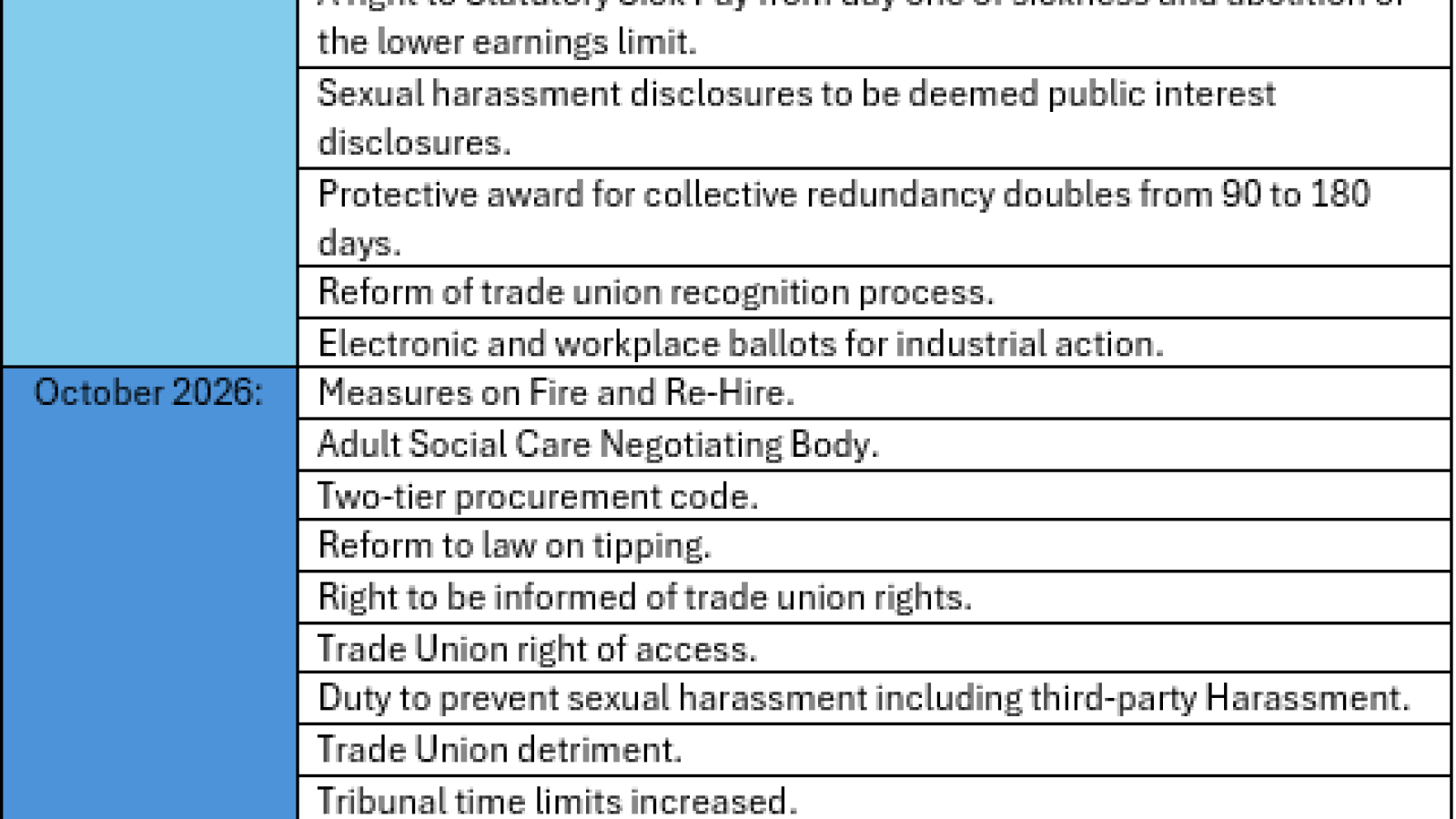
Spotlights:
Unfair Dismissal
Under the current framework, employees must complete two years’ continuous service to qualify for protection against unfair dismissal. The 2025 Act reduces this qualifying period to six months. In addition to this significant reduction, the Act will remove the statutory cap on compensatory awards for unfair dismissal. As a result, employment tribunals will have discretion to award higher levels of compensation where appropriate, which will inevitably increase employers’ potential financial exposure in unfair dismissal claims.
Third-Party Harassment
The Act introduces a new duty on employers to take all reasonable steps to prevent third-party harassment of employees in the course of their employment. This duty applies to all forms of harassment. Employers will be required to undertake detailed risk assessments to identify where there is a risk of third-party harassment and take steps to mitigate those risks. Employers should update their existing policies and procedure to ensure compliance as employers may be held liable where an employee is harassed by a third party in the course of their employment.
Guaranteed Hours
Employers will be required to offer contracts (Guaranteed Hours Offer “GHO”) that reflect the regular hours worked over a reference period, typically 12 weeks to employees of zero-hour contracts, agency workers, and low-hours workers. Employers must provide reasonable notice of shifts and may be liable to compensate workers for short-notice cancellations.
Practical Considerations
As it is shown in the above table the 2025 Act will have a sizable impact in the workplace. To help adapt to these changes employers should consider reviewing existing policies and undertake managerial training to ensure compliance with the Act’s new provisions.
Should you wish to discuss any of the changes in detail please contact Linda Fyffe at Linda@laurieandco.co.uk or Faith Milne at Faith@laurieandco.co.uk.