The conversation around artificial intelligence has been dominated by the question, Will AI replace jobs?
It's an understandable concern and not one I wish to diminish. But the more I’ve explored AI’s impact on organisations, the more I’ve realised that there’s another important shift and increasingly leaders aren’t asking Who should we hire?, they’re asking What capabilities do we need, and what is the best way to access them?
This change in thinking has implications not only for workforce planning, but executive recruitment too.
From Headcount Planning To Capability Planning
Workforce planning used to be comparatively straightforward. Business growth created more work, more work required more people, and recruitment followed.
Now, organisations have more options.
Imagine a business embarking on a digital transformation. Ten years ago, the obvious solution may have been to recruit a full-time Transformation Director or IT Director. Today, the same organisation might achieve a better outcome by combining intelligent automation, a fractional executive, specialist consultants and targeted upskilling of its existing workforce.
That’s why I believe the impact of AI on recruitment is unlikely to be only a story of job creation or job losses. Instead, we're beginning to see a market that is diverging by sector, role type and organisational strategy.
Some organisations will automate routine work and recruit less. Others will invest heavily in new leadership, digital capability, organisational transformation and access talent through a range of approaches.
For executive recruiters, this creates an opportunity to add value at a far more strategic and consultative level.
The Challenge Isn't AI. It's Capability.
Insight from Skills England highlights that many organisations are still working out what AI capability looks like. The challenge is no longer deciding whether to adopt AI, but to understand the combination of technology, leadership and skills required to use it effectively.
The democratisation of AI means access to the technology itself is unlikely to sustain a competitive advantage because everyone has access to similar tools. The real differentiator will be how organisations deploy the tools and how effectively they combine AI with human judgement, experience and leadership.
This is also why I don't believe businesses simply need an "AI expert".
Successful AI adoption is rarely a technology challenge alone. It demands a much broader blend of capabilities: leaders who understand the operating model, can identify where AI creates genuine commercial value, redesign processes rather than automate inefficiencies, lead organisational change, engage employees, manage risk and maintain customer confidence.
I’m discovering that implementing AI automation creates demand for more leadership capability, not less because it isn’t an IT project, it’s a business transformation programme.
AI Changes Tasks, Not Simply Jobs
Microsoft's Work Trend Index suggests AI is expanding what knowledge workers can achieve while simultaneously increasing the importance of distinctly human capabilities such as critical thinking, judgement and the ability to challenge AI-generated outputs.
Its findings show that 86% of surveyed users say they treat AI output as a starting point, not a final answer, and that they “stay responsible for the thinking.”
As routine activities become automated, judgement, collaboration, creativity, leadership and decision-making become more valuable and organisations will need leaders capable of redesigning work, not simply reducing headcount.
The Rise Of Capability Portfolios
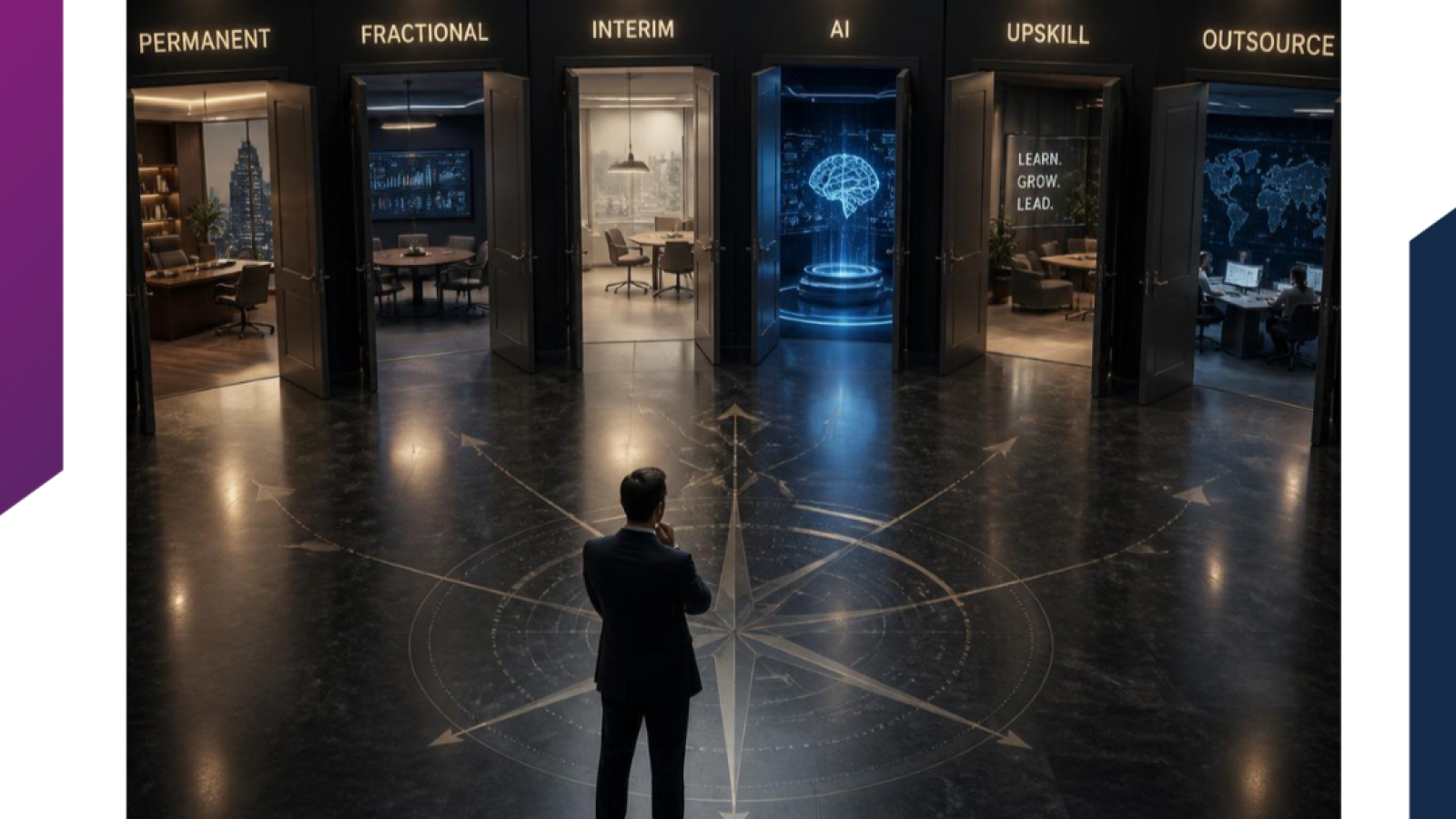
Forward-thinking organisations are beginning to assemble capability portfolios. For the people and skills component of the portfolio, rather than relying exclusively on permanent employees, they access a variety of talent sources:
- permanent leadership
- fractional executives
- interim specialists
- external expertise
- strategic partnerships
- internal talent developed through reskilling.
Returning to the question I cited at the start, it’s no longer just a question of
Who should we hire? but What's the most effective way to access this capability?
Sometimes the answer will be a permanent executive.
Sometimes it won't.
Viewed through a capability lens, fractional leadership is not simply a cost-effective option or a response to economic uncertainty but a strategic way of accessing expertise precisely when it is needed.
In recent months, I've introduced clients to fractional finance leaders supporting business growth; interim operational specialists driving organisational improvement, and experienced tax professionals helping businesses navigate increasingly complex legislation. None of these organisations lack ambition. They simply recognised that permanent recruitment wasn't the only, or necessarily the best, solution.
Why "Flat Hiring" May Become The New Growth
The World Economic Forum argues organisations should invest more in internal capability and workforce flexibility than relying solely on external hiring.
Increasingly, organisations may grow revenue, improve productivity and expand capacity while maintaining relatively stable employee numbers.
For some businesses, flat hiring may no longer indicate stagnation. It may reflect a sophisticated approach to building organisational capability using technology where it adds value while investing selectively in leadership and specialist expertise.
What This Means For Executive Recruitment
In the future, the executive recruitment consultant is less likely to be judged by how quickly they fill a vacancy and more by the quality of their strategic conversations.
Certainly, ask your consultant to evidence their track record but evaluate how their questions indicate commercial judgement, market insight, and an understanding of organisational change, succession planning and leadership.
As organisations rethink how expertise is accessed, the role of executive recruitment extends far beyond identifying candidates.
It's about helping leaders determine not just who they need, but what they need, when they need it and how they should access it.
The organisations that thrive will be those that combine technology, leadership and human expertise in the smartest way.
And the executive recruiters who create the greatest value will be those who help them do it.