Keeping up to date with the energy market can help you to better understand the factors that affect your business costs. We’ve rounded up the key developments from the past month, what’s driving them, and what they could mean for your business.

UK wholesale energy prices continue to rise
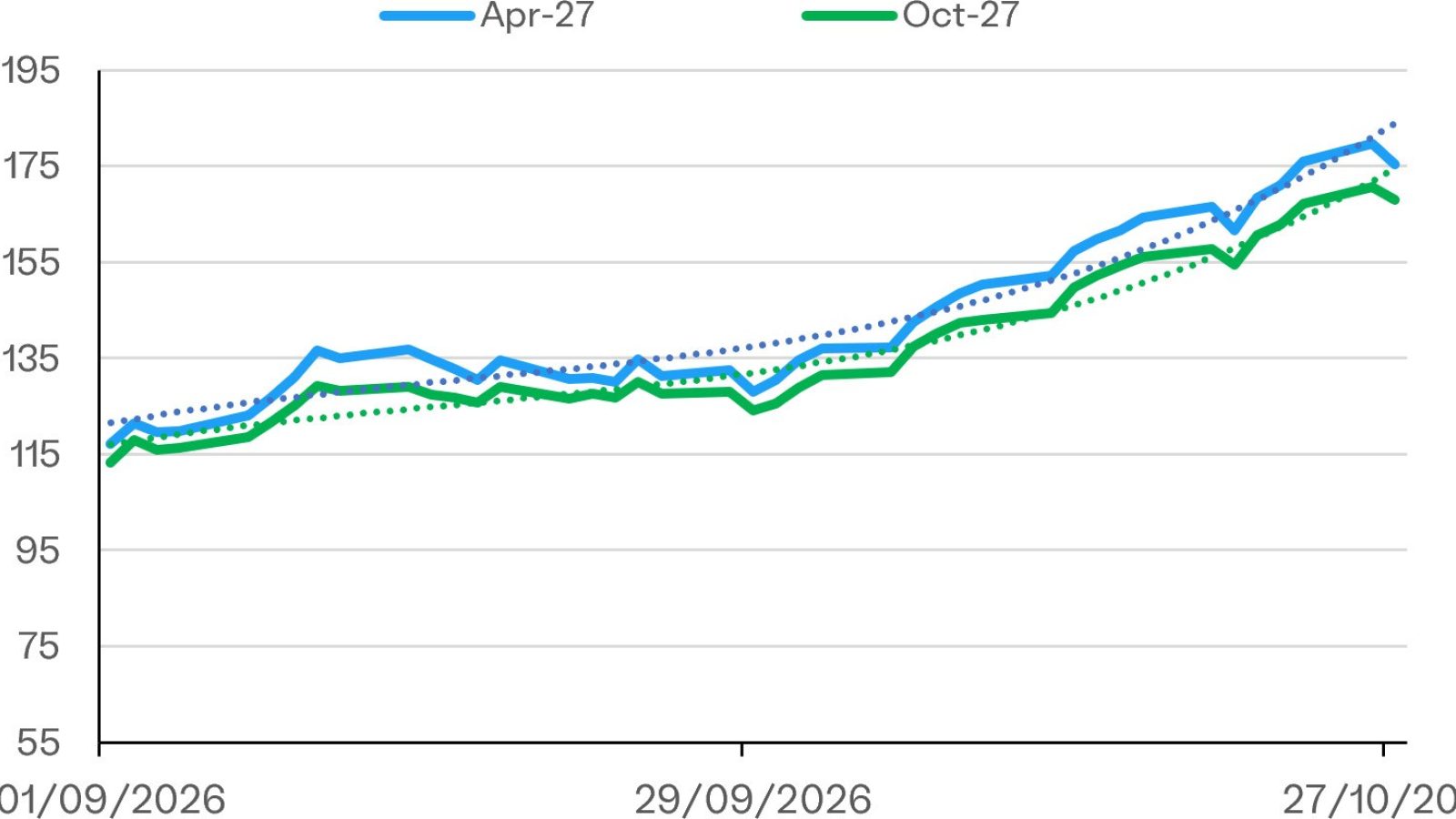
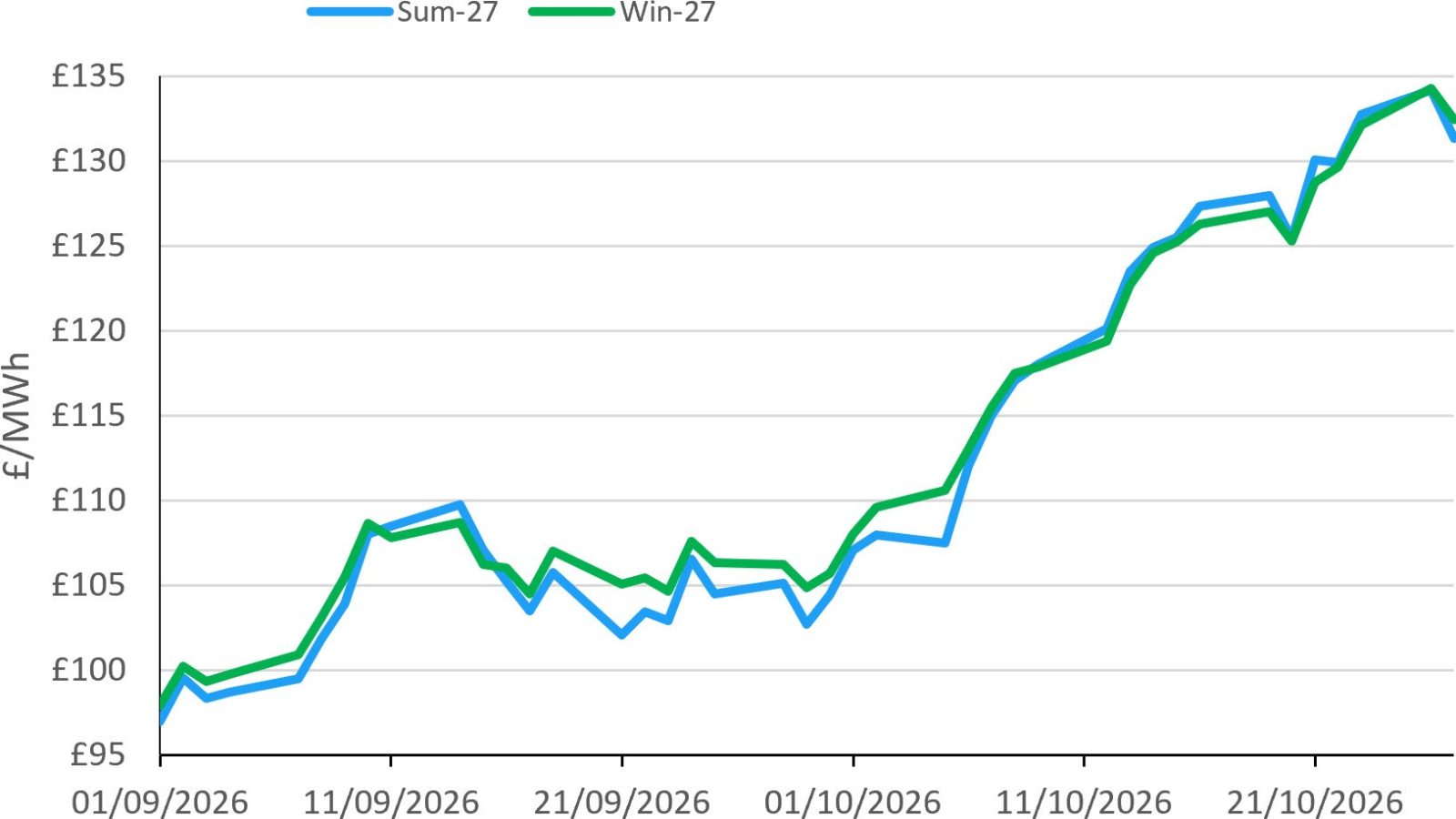
Last month, we reported that energy prices were on the rise – and this trend has continued. From 29th September to 27th October, the price of gas increased by 37%1, and the price of electricity rose by 28% for summer 2027, based on end of day settlement prices.
Ongoing disruption in the Middle East remains a key driver of this rise, with renewed concern that there may be further disruption to gas production and transportation. Storage of energy in Europe is also noticeably lower than normally expected at this time of year, although Europe is still expected to meet its amended storage target. In addition, colder weather is expected in the coming weeks, alongside some outages in Norwegian energy production, weaker production from nuclear power stations, and quite variable wind availability. These factors have further reduced energy supply in the short-term.
How UK wholesale gas prices moved in September and October 2026
How UK wholesale electricity prices moved in September and October 2026
Why wholesale energy price changes matter to businesses:
- Wholesale energy prices are one of the factors that influence the price businesses pay for energy. If your contract is approaching renewal, changing market conditions may affect the prices available to you.
- Businesses who are nearing renewal will need to decide how much certainty they would like to secure with a fixed contract, vs. the possibility that prices may ease in the coming months.
What could the Jackdaw gas field mean for UK energy supply?
The Government has agreed that the regulator can grant consent for gas production to begin at the Jackdaw gas field in the North Sea. It will start to supply gas to British homes and businesses in the coming few weeks. At its peak, it’s expected to increase domestic gas production by around 6%.
The decision comes at a time when geopolitical events continue to create volatility in the global energy market. Producing more gas in Britain could strengthen energy security and reduce our reliance on imported supplies.
Gas produced in the North Sea is still sold into an interconnected global market though, so wholesale energy prices will continue to be influenced by events affecting global supply. However, the company that produces gas from Jackdaw will make profit in the UK and pay taxes on those profits. The Government is expected to receive around £1.5 billion in taxes from Jackdaw over its lifetime. There’s no guarantee that this money will be used to support businesses or reduce energy costs. However, the Government may choose to do what they did in 2022, when they implemented a levy on the oil and gas sector during the energy crisis, and this money was used to fund cost-of-living support for British families.
Why the Jackdaw gas field matters to businesses:
- Increasing the amount of energy that’s produced in Britain could slightly reduce our reliance on imported supplies, which is important when those supply chains are disrupted.
- However, this doesn’t necessarily mean lower prices. Britain’s gas prices are still shaped by the global market, so producing more energy in Britain won’t directly reduce energy prices – unless the Government chooses to direct some of the extra tax that’s generated by the gas field into energy cost support schemes.
Businesses considering price increases due to rising energy cost
Around 1 in 6 British businesses expect to increase their prices in November 2026. This is 7 percentage points higher than last year. Rising energy costs are one factor behind this: 32% of businesses who are planning to increase prices said energy prices were influencing that decision.
The impact is particularly significant in accommodation and food services, where 54% of businesses planning price rises cited energy costs as a key factor.
Why this matters to businesses:
- Rising energy costs can affect more than your energy bill, putting pressure on margins and potentially influencing the prices you charge customers.
- Understanding and managing your energy costs is important to ensure you make informed decisions around future business planning, pricing and budgets.