Many people hear "May you live in interesting times" as a warning, yet the phrase can also be read as an opportunity. Periods of disruption do not just unsettle economies.
They reshape them. And disruption has not been in short supply over the past decade.
This week is Global Entrepreneurship Week, and the shifts in business life are creating room for new enterprises.
Geopolitical tension, fragile supply chains, and economic uncertainty are pushing companies to look closer to home for suppliers, partners, and customers. That creates gaps that did not exist a few years ago, and Scottish entrepreneurs are well-placed to fill them.
Scotland has the raw material. The average founder is 37, the youngest in the UK, based on data from the Global Entrepreneurship Monitor (GEM).
The challenge is what happens next. The divide between starting and growing is where Scottish ambition is most at risk.
Three hurdles stand in the way. Capital is the first test. Scaleups in London raise their first funding at a median age of two years. Scottish businesses need finance that stays with them through slower growth, and a clear route to it, especially in sectors like advanced manufacturing.
Mentorship is the second. Women in Scotland are 10 percentage points less likely than men to say that local business support is adequate, according to GEM data. Support only works if owners trust it, so mentors who have built businesses matter as much as the programmes themselves.
Opportunity is the third. UK Export Finance (UKEF) provided more than £11 billion of support in 2025/26 to 937 businesses, around two-thirds of them SMEs, to help firms trade abroad.
Global Entrepreneurship Week provides a practical launchpad. Robert Gordon University (RGU) is hosting four events in Aberdeen. The first is a conversation featuring Chris Herd, founder of Firstbase, on raising $65 million and running remote operations from Scotland.
A business breakfast follows at the Sir Ian Wood Building. An online session on AI in business runs with Women in Tech Aberdeen, and the week closes with the Business Ideas and Opportunities Trade Fair.
Ambition also has to go beyond Scotland's borders. Services make up 49% of Scotland's exports, including sales to the rest of the UK. The Scottish Government has set a goal of raising international exports from 20% of gross domestic product (GDP) in 2017 to 25% by 2029. Exporting is one of the clearest tests of this. Closing that shortfall requires businesses to treat exporting as a strategic priority.
The Aberdeen & Grampian Chamber of Commerce's latest energy transition survey found that many energy businesses see growth opportunities outside the UK.
New start-ups that export can face key challenges:
• Rising costs of exporting – transport costs are increasing and the customs duty landscape is becoming ever more complex
• Supply chain concerns
• EU red tape
• Finance, cash flow and payment risk
There is a well-rehearsed script in the UK whenever growth disappoints: businesses point to government, government points to global shocks and economists point to structural weaknesses. While policy and infrastructure matter, business leaders cannot let caution clip ambition. A supportive economic framework can help, but it cannot replace that ambition.
At MHA, we believe that with the correct support in place, from programmes such as Global Entrepreneurship Week, Scotland has the talent and ambition to overcome its hurdles, become a centre for entrepreneurship and reach its goal of becoming a flourishing exporter to the rest of the world.
Cometh the hour, cometh the Scottish entrepreneur.
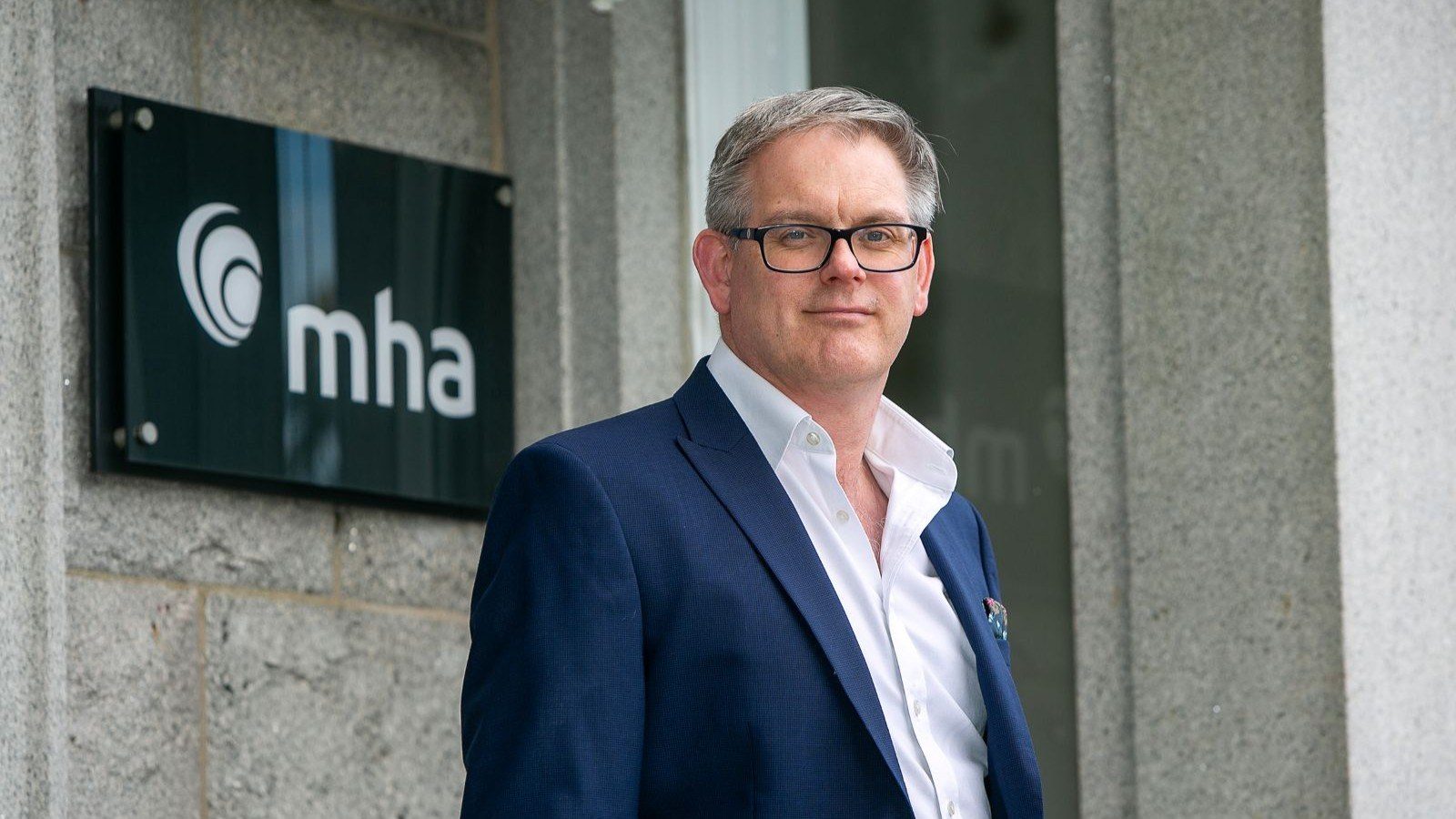
Global Entrepreneurship Week runs to 22 November. Aberdeen-based Stuart MacPherson is a Partner at MHA, the accountancy and advisory firm. MHA is the independent UK member firm of Baker Tilly International. For further information, visit www.mha.co.uk