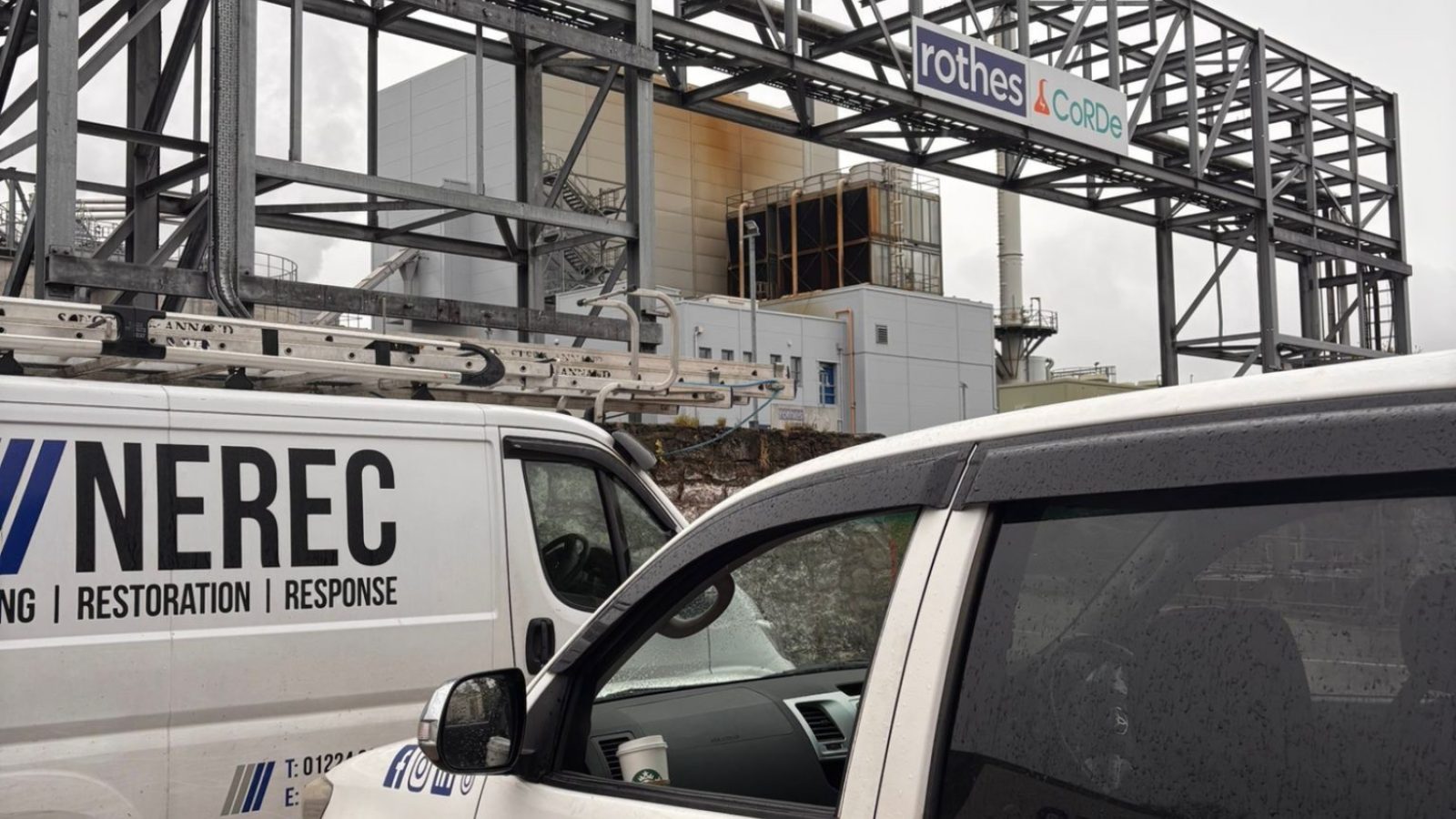
The Rothes CoRDe Biomass Plant in Speyside generates enough renewable energy to power 9,000 homes, processing 115,000 tonnes of draff from local distilleries annually.
But since opening in 2013, the facility had never received a complete exterior clean.
After more than a decade of continuous operation, whisky mould and severe rust staining had dramatically altered the plant's appearance. The maintenance team needed comprehensive restoration that would protect materials from further deterioration whilst keeping the active facility fully operational.
The Challenge
NEREC Ltd faced several complex obstacles. Whisky mould, the stubborn black fungus found in distillery environments, had created thick coatings across exterior surfaces. Years of chlorine use had caused extensive rust streaking visible from the main road. Much of the contamination existed at significant height or in confined spaces between operational equipment.
The plant remained fully operational throughout, requiring careful coordination with production schedules. Speyside's windy conditions frequently affected high-access work, demanding flexible contingency planning.
The Solution
Managing Director Andrew Bruce conducted comprehensive on-site surveys to plan the phased approach. Different cherry pickers tackled various zones, a compact unit navigated tight spaces, whilst a larger one accessed the highest structures during scheduled windows.
For whisky mould removal, the team applied professional-grade antifungal biocide first to break down the mould's grip on surfaces. Once loosened, pressure washing lifted the mould from robust surfaces, whilst steam cleaning handled delicate areas. This two-stage process eliminated spores before removal, creating lasting results crucial for distillery environments.
Rust removal required surface-specific methods. Delicate surfaces received soft washing with specialist rust dissolvers. Robust materials like steel and concrete underwent controlled pressure washing. One challenging roadside wall required a coordinated three-person operation: one applying cleaner from the roof, another agitating with a telescopic brush, and a third rinsing with long-range pressure washing.
When winds halted cherry picker work, the team shifted to ground-level areas, maintaining project momentum whilst prioritising safety.
The Results
The plant was successfully restored to near-original condition with zero safety incidents and minimal operational disruption. Cladding, steel containers, and concrete structures were cleaned to a near-new finish. All whisky mould and rust streaking were completely removed.
By addressing contaminants before they caused permanent degradation, the plant avoided costly replacement of cladding and infrastructure, representing substantial cost savings.
Stephen Olivant, Maintenance Manager at Rothes CoRDe, said: "We're very impressed with the results of NEREC's recent work on site, they have returned the buildings to an as new appearance. Crucially, they were very flexible in their approach to the cleaning plan, and worked with us seamlessly to avoid disrupting our HGV deliveries."
Andrew Bruce reflected: "This project demonstrated exactly what NEREC stands for: expertise, safety, and flexibility. Our team handled complex surfaces, changing weather, and access limitations with professionalism from start to finish."
The Rothes CoRDe restoration demonstrates how specialist industrial cleaning protects valuable assets whilst maintaining operational continuity in challenging environments.