Businesses change. Teams grow, contracts are won, sites expand and suddenly the space that worked perfectly well a year ago no longer works at all.
The traditional answer might be to extend an existing property or start thinking about a new building.
But that isn't always the only option.
Modular buildings have changed considerably over the years and can provide businesses with a flexible way of creating additional space – from a simple office or welfare facility to a large, multi-bay building designed around a particular operation.
At Greenwell, our Sales Director, Scott Brown, oversees our larger modular building projects and has seen first-hand just how varied the requirements can be.
The starting point is rarely simply, "We need a cabin."
It's normally, "We need more space – how can we make it work?"
Building around the business
One of the advantages of modular buildings is their flexibility.
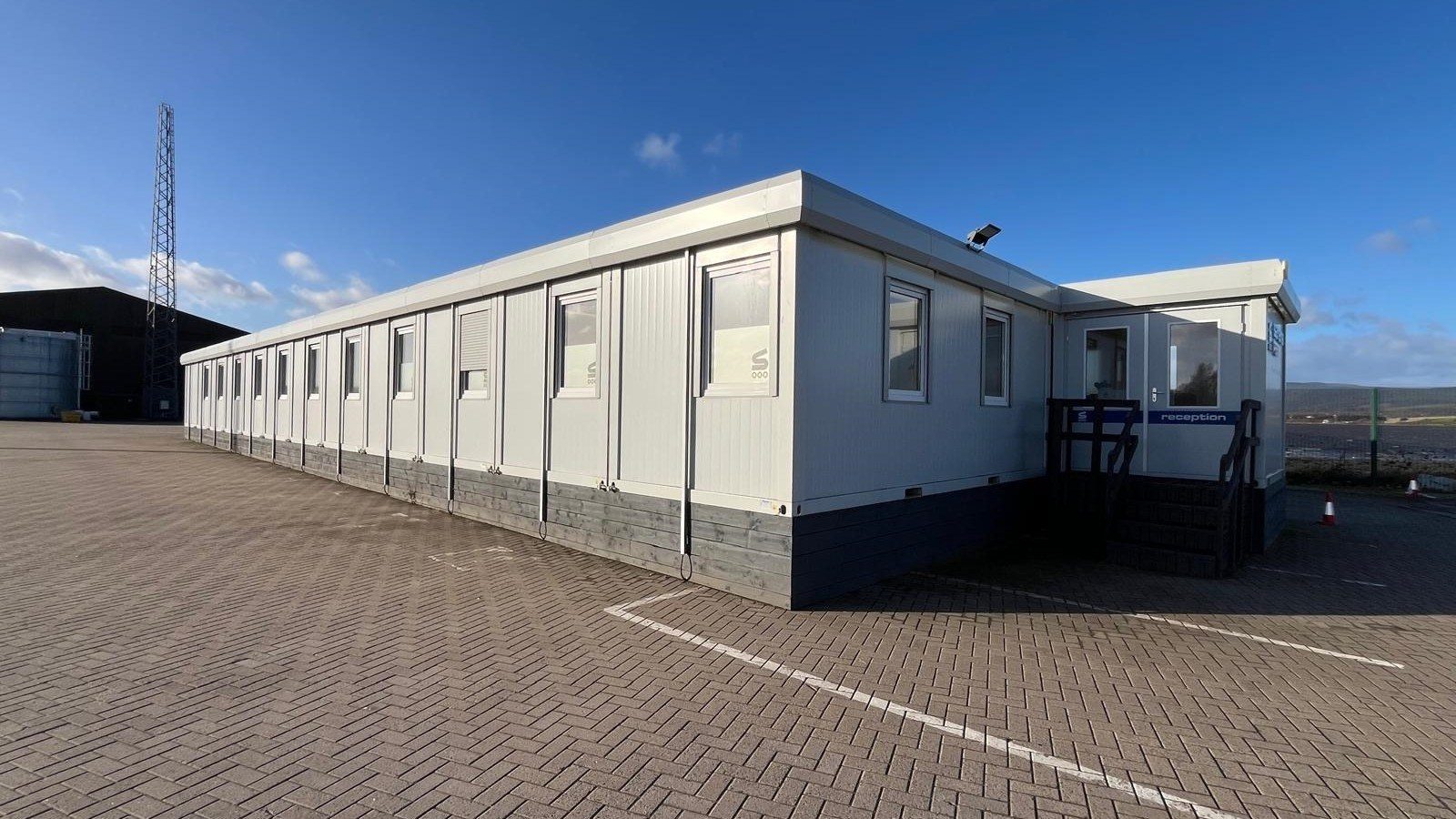
Depending on the project, individual modules can be combined to create larger buildings incorporating offices, meeting rooms, kitchens, toilets, changing facilities, welfare areas and other specialist spaces.
That means the solution can be designed around what a business actually needs rather than trying to make the business fit an existing building.
It can also provide an option when additional accommodation is required at an existing operational site where conventional construction may be disruptive or impractical.
For Scott, some of the most interesting projects are the ones that start with a requirement and develop from there.
How many people will use the building? What will each area be used for? How should people move through it? What facilities are required? Where will the building sit on the site?
Those conversations happen long before the finished modules arrive.
New doesn't necessarily mean built entirely on site
There is sometimes a perception that choosing modular means compromising on the finished building.
In reality, modern modular buildings can be designed and manufactured specifically for the project, with much of the construction and preparation taking place away from the customer's site.
This controlled approach to manufacture can bring significant practical benefits.
While site preparation is taking place, work on the modules can progress separately. Once ready, the units can be transported to site, positioned and connected to create the finished building.
For businesses operating from busy sites, reducing the amount of construction activity taking place around their day-to-day operation can be a major advantage.
It can also make project timescales more predictable and reduce some of the disruption associated with traditional on-site construction.
But new isn't always the answer
At Greenwell, one of the questions we believe is worth asking at the beginning of a project is whether everything actually needs to be new.
Used modular buildings can have a considerable amount of life left in them.
Depending on their condition and the requirements of the next user, existing units can potentially be refurbished, reconfigured and given an entirely new purpose.
For one business, a module may have reached the end of its usefulness. For another, it could be exactly the space they need.
That is where regeneration comes into the conversation.
Reusing an existing modular building keeps materials and equipment in productive use for longer and can reduce the need to start again from scratch. It can also offer businesses another option when considering budgets and project requirements.
The important part is choosing the solution that is appropriate for the intended use rather than assuming that new is always better – or that used will always be suitable.
Designed for change
Perhaps one of the most useful characteristics of modular buildings is that they reflect something businesses already know very well: circumstances change.
A company might need additional offices because its workforce has grown. A project site might require welfare and meeting facilities. A business may need temporary accommodation while another part of its premises is being refurbished. Or a completely new facility may be required without the business wanting to embark immediately on a conventional building project.
Modular gives businesses another way of thinking about those requirements.
And because buildings are created from individual modules, there can also be opportunities to adapt, relocate or reconfigure accommodation as requirements change, depending on the particular building and project.
That flexibility can be valuable when businesses are reluctant to make permanent decisions based on requirements that may look very different several years from now.
Start with the problem, not the product
After years of working with modular buildings, one thing Scott has learned is that the best projects don't necessarily begin with a customer knowing exactly what they want.
They begin with a problem.
"We've run out of office space."
"We need welfare facilities on this site."
"We've won a contract and need additional accommodation."
"We need a building, but we can't have months of construction disrupting the site."
From there, the job is to look at the available space, understand how the building needs to function and work out whether new, used or a combination of solutions makes the most sense.
Sometimes that means a relatively straightforward modular building.
Sometimes it develops into a large multi-bay complex.
Another way to think about space
As businesses look for ways to operate more efficiently and make better use of resources, modular buildings deserve to be considered as more than simply temporary accommodation.
New modular buildings can offer an efficient route to creating purpose-designed space, while used buildings provide an opportunity to reuse and regenerate an existing asset.
Both have their place.
For us, the important thing is not starting with the assumption that a customer needs a particular product.
It is starting with the question:
What space do you need – and what's the smartest way of creating it?