A new lectureship focused on understanding and tackling neurodegenerative diseases has been established at the University of Aberdeen thanks to a £500,000 donation from one of north-east Scotland’s most important medical research charities.
The lectureship has been made possible thanks to Saving Sight in Grampian (SSIG), which donated half a million pounds to fund the post.
The Saving Sight in Grampian Lectureship in Neuroimmunology will carry out research into how human stem cell models can be used to understand neuro-immune interactions in neurodegenerative diseases including motor neuron disease and frontotemporal dementia. The main aim of the research is to understand disease mechanisms and identify new therapeutic targets for these currently incurable diseases.
Neuroscientist Dr Björn Vahsen has been appointed to the role and will carry out his research at the Institute for Medical Sciences (IMS) in Aberdeen. After studying Medicine and obtaining a research doctorate in Medicine at the University of Göttingen, he went on to complete an MSc and DPhil in Clinical Neurosciences and postdoctoral research at the University of Oxford. In 2024, he was a Visiting Research Fellow at Memorial Sloan Kettering Cancer Center in New York. As well as the SSIG Lectureship, this year he was also awarded an independent fellowship from the MND Association. He has received several prizes for his work, most notably the European Network to Cure ALS (ENCALS) Young Investigator Award Gold Medal in 2025. He joined the University and began his research last month.
The donation will also fund a post-doctoral research position to support Dr Vahsen’s research.
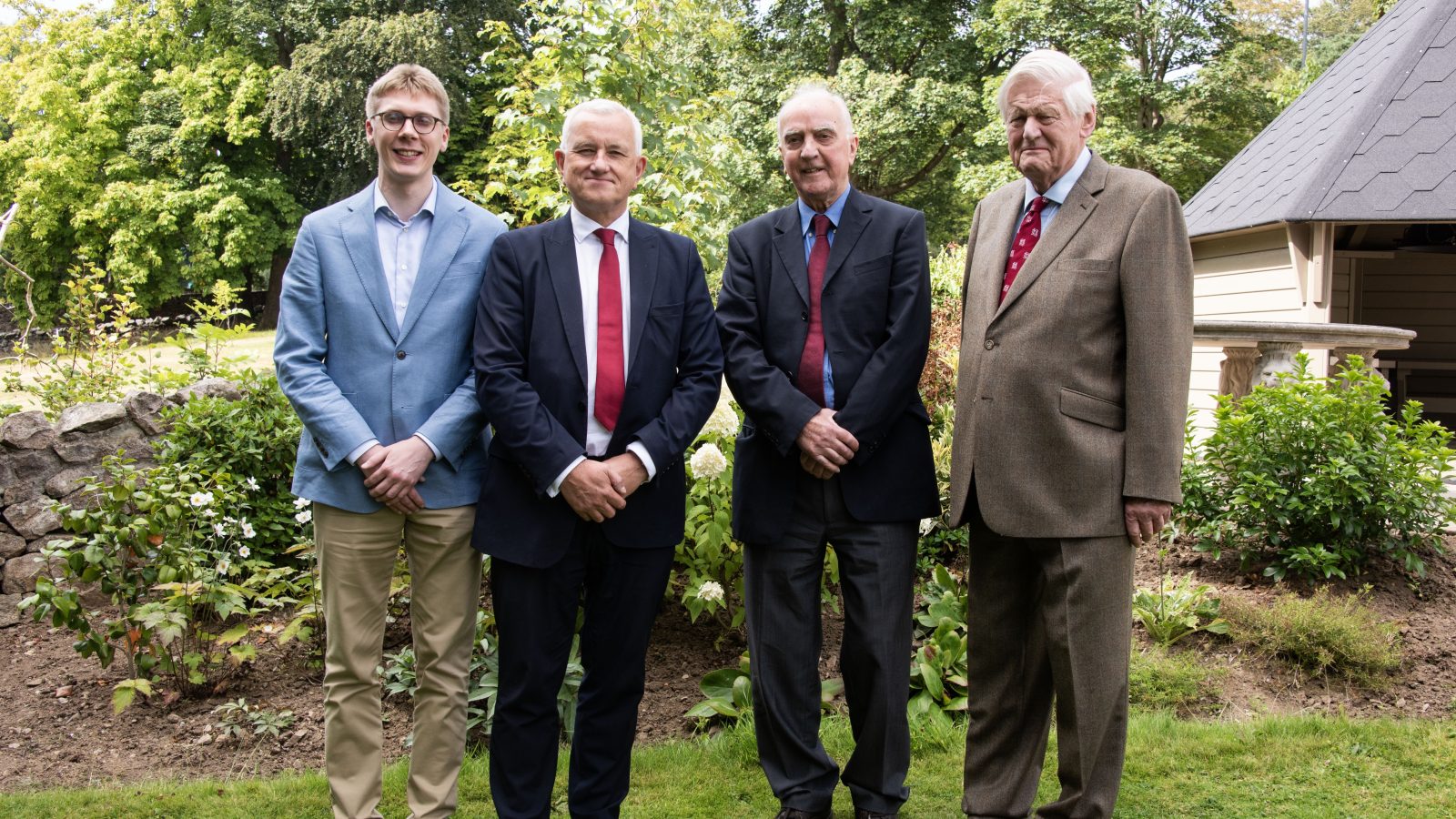
The University has a long-running relationship with SSIG, which has raised more than £4million to support research projects led by University of Aberdeen researchers. Saving Sight in Grampian was founded in 1988 by Dr Iain Fraser, whose personal experience of sight loss inspired a lifelong commitment to supporting medical research. Working closely with Professor John Forrester, Professor of Ophthalmology at the University of Aberdeen and Honorary Consultant Ophthalmologist with NHS Grampian, Dr Fraser established the charity to help advance understanding, prevention and treatment of sight-threatening conditions. Since then, SSIG has become one of the region's most important medical research charities.
Since 1995, the SSIG Laboratory has been based within the University's Institute of Medical Sciences, supporting internationally recognised research into sight-threatening eye diseases such as uveitis, as well as a range of autoimmune and inflammatory conditions including diabetes and macular degeneration: a form of neurodegeneration with links to dementia.
Dr Björn Vahsen said: “I’m delighted to take up this prestigious post and very grateful to Saving Sight in Grampian for supporting its establishment. I’m excited to establish my research group in Aberdeen and to work closely with the excellent colleagues at the Institute of Medical Sciences. This lectureship provides a fantastic opportunity to pursue exciting questions about how neuro-immune interactions contribute to neurodegenerative diseases, with the ultimate aim of identifying new avenues for treatment. I’m looking forward to building new collaborations in Aberdeen while continuing to work with colleagues and collaborators across the UK and internationally.”
Mike Hastie, Chair of Saving Sight in Grampian, said: “Having been involved with Dr Iain Fraser since the charity’s inception, I am proud to continue as its Chairman. All money raised by SSIG has been passed on to Professor Forrester and his team to carry out their research. We’re pleased to have been able to fund this prestigious lectureship and look forward to continuing our relationship with the University of Aberdeen and the researchers at the SSIG Laboratory.”
Professor John Forrester said: “This new post is the fulfilment of a longstanding interest in inflammation and neurodegeneration in the eye and the brain by the Ophthalmology Research Group at the University of Aberdeen and we are looking forward to Dr Vahsen opening up new areas of research which might lead to new methods of diagnosis and treatment of these devastating disorders.”