Scottish company Aurora Energy Services (Aurora) is tackling a skills shortage in renewable energy by training military service leavers who will be “site ready” to take up posts in the wind sector.
Delivered at Aurora’s Renewable Energy Training Centre in Inverness - the largest facility of its kind in the Highlands - the course has been specifically designed to convert military service leavers into immediately deployable personnel for onshore and offshore wind projects.
Two of the participants on the seven-week Military to Wind pilot programme - which is supported by industry training bodies - have already been offered jobs.
The pilot programme aligns with broader efforts from government and industry bodies to support workforce transition, and was jointly funded by the Ministry of Defence and the Engineering Construction Industry Training Board (ECITB), which played a key role in shaping the course standards.
Participants are selected from service leavers with an existing Level 3 engineering background - mechanical, electrical or instrumentation - ensuring they already have a technical foundation that can be built upon.
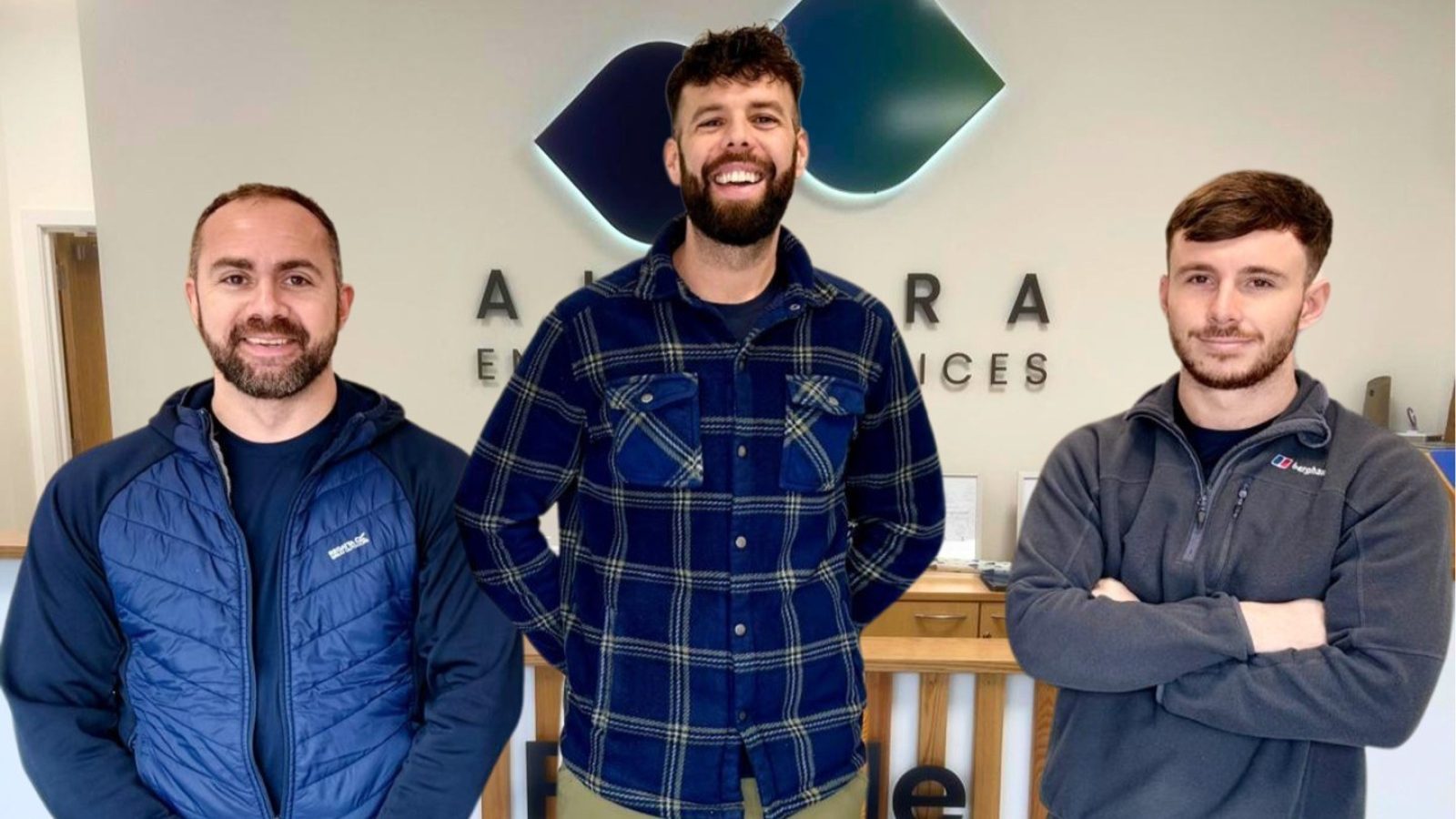
Military to Wind participants, left to right, Jason McLaughlin, Declan Paterson and Max Donnelly.
Andy Elrod, Director of Training at Aurora Energy Services, said: “The qualities service leavers bring - discipline, attention to detail, safety awareness, technical competence and the ability to perform in demanding environments - are exactly what the wind industry needs.
“Applicants completing the course will be site-ready so they can go out and be gainfully employed in roles including pre-assembly construction and operations and maintenance.”
Participants will attain industry-recognised qualifications, including Global Wind Organisation (GWO) training, advanced rescue and safety certifications, and ECITB-accredited competencies, alongside additional modules covering wind turbine safety rules and technical theory.
The programme includes a defined employment pathway with each successful participant guaranteed an job interview with Aurora and other companies from a growing network of partners.
Successful course participant Declan Paterson, 33, originally from Kilmarnock, served 13 years with the Royal Electrical and Mechanical Engineers Corp (REME) as a Recovery Mechanic and this week started as a lifting technician at Aurora.
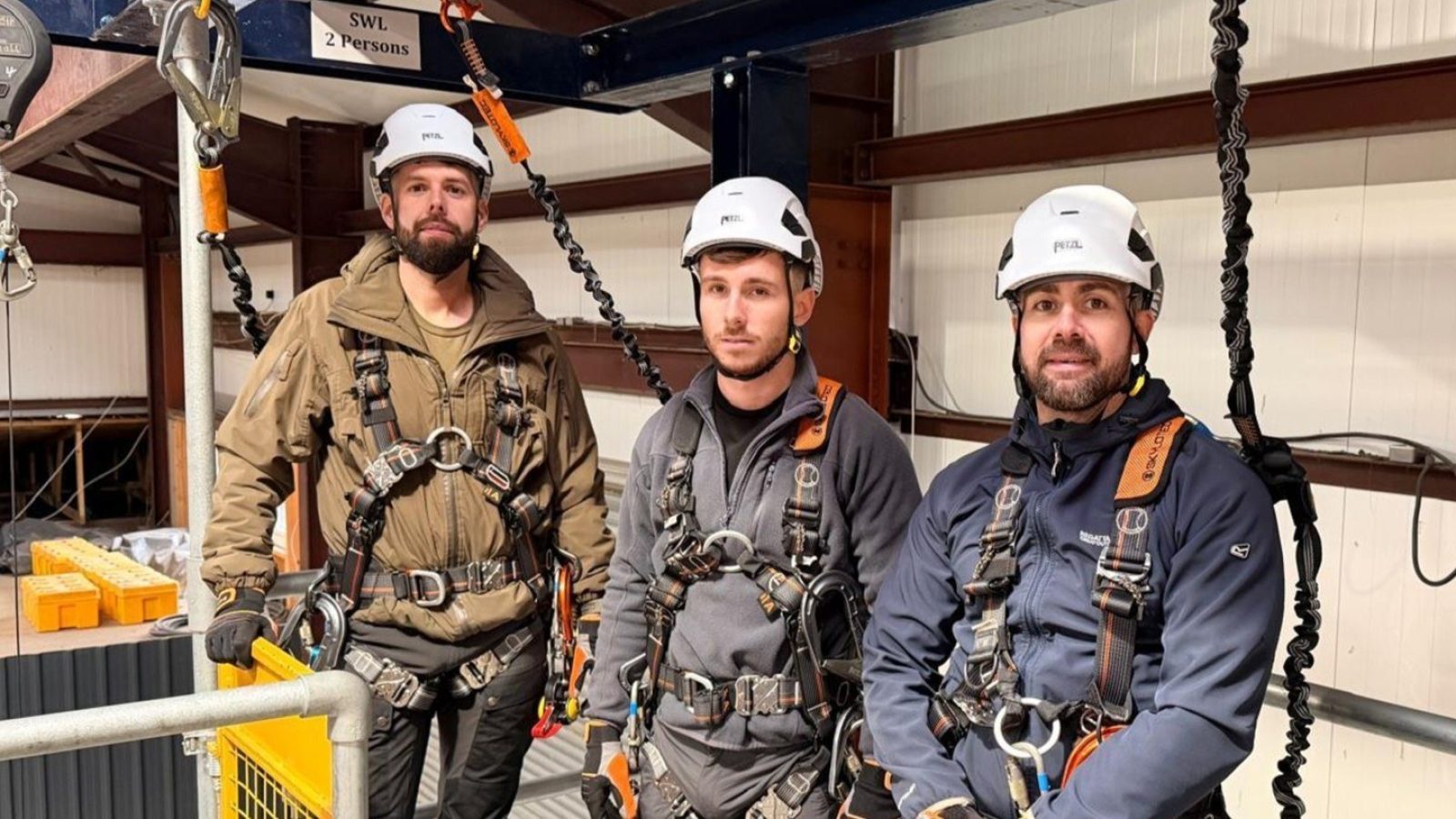
Military to Wind pilot participants left to right - Declan Paterson, Max Donnelly and Jason McLaughlin
He said: “My background is recovery and cranes and that was always something I was looking for. It was my boss who told me about the course and I thought that might suit me.
“The quality of the training shone through during the course. There was not a single lesson that was poor and the fact that you gain five or six qualifications was an important factor. I’ve had my fair share of nights in the desert and now I am looking forward to getting started in my new career.”
Jason McLaughin, who also completed the course, said: “As someone transitioning from a 20+ year career in the military, one of the biggest challenges I found entering the wind industry was simply getting in front of employers.
“Being part of Aurora’s Military to Wind programme has completely changed that. It’s not just training - it provides direct access to employers and guaranteed interview opportunities, which is something that’s very difficult to achieve as a new entrant.”
The initiative is supported by the Scottish Veterans Commissioner Susie Hamilton, who champions the interests of veterans, and it aligns with Aurora’s commitment to the Armed Forces Covenant, reinforcing its role as a responsible employer within the energy transition.
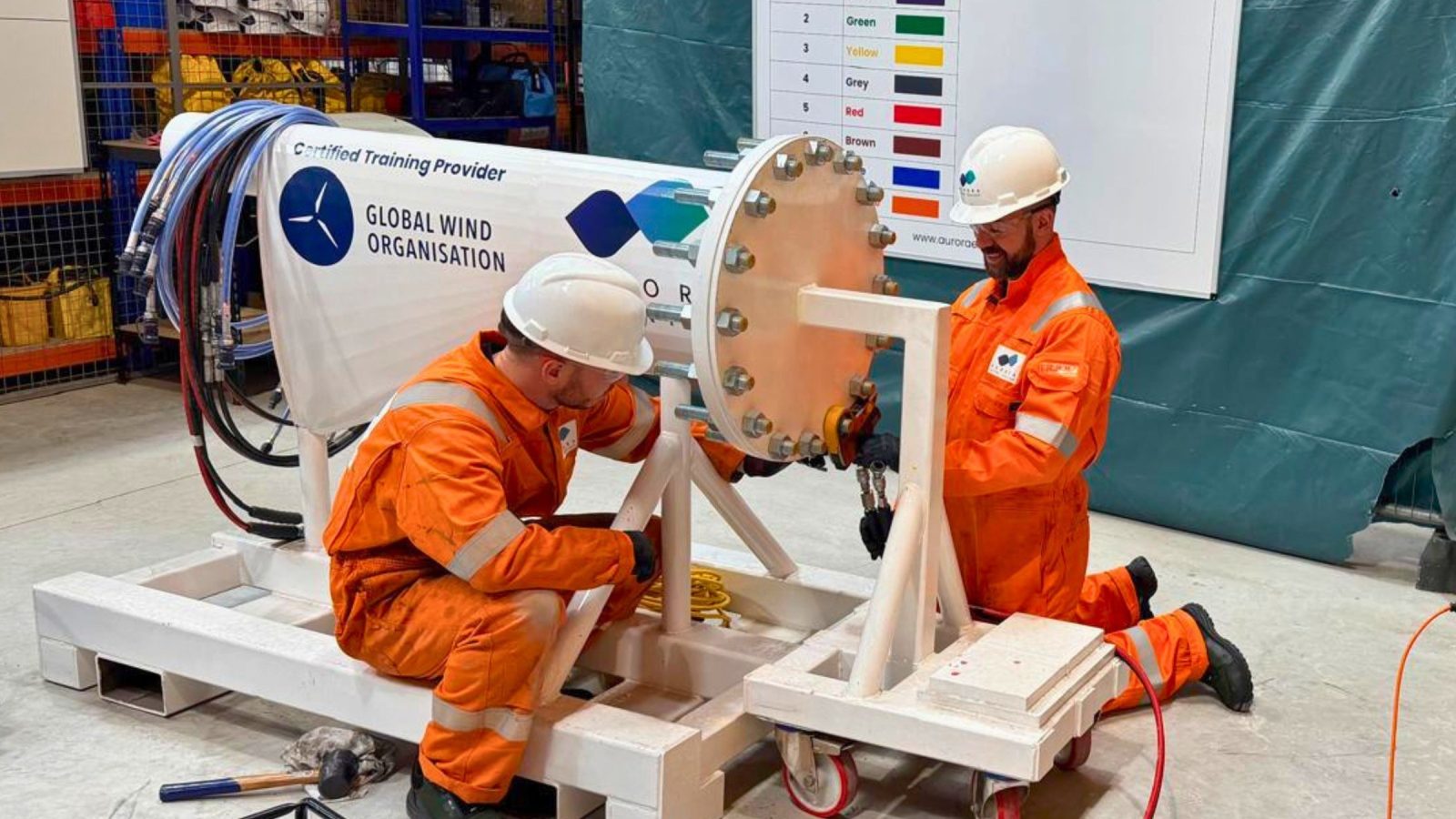
Military to Wind programme participants Max Donnelly, left, and Jason McLaughlin.
Lieutenant Commander (ret) Hamilton said: “It was inspiring to hear how this course equips Service Leavers with the technical skills, industry awareness, and practical experience needed to step confidently into one of Scotland’s most rapidly expanding sectors.
“I was equally impressed by Aurora’s dedication to supporting Service Leavers as they build new futures. Their collaborative approach is a great example of how industry can help create meaningful pathways into employment, particularly in the growing renewables sector.”
Aurora is now exploring partnerships and funding with regional and industry bodies to support future cohorts and the vision is that the template could be rolled out by ECITB as a nationally recognised pathway into the wind sector for service leavers.
Andrew Hockey, CEO of the ECITB, said: “Aurora’s Military to Wind programme used the ECITB training standards from the Wind Cross Skills pilot that we ran in 2025 for oil and gas workers.
“It is very helpful to see this deployed for military personnel and our team are using the learnings from this latest pilot in the development of the final programme which will be launched in the next few months.”