The SQUID system designed by Encomara and manufactured by Aurora Energy Services (AES) which will fundamentally improve how floating offshore wind turbines (FOWTs) are installed, has received product design assessment (PDA) from the American Bureau of Shipping (ABS).
The PDA marks the next stage of international certification following approval in principle (AIP) granted last November for Squid, developed by the Aberdeen-based floating wind deployment systems and subsea engineering specialist.
The company’s pioneering connection solution integrates pre-installed mooring lines and electrical connections into a single subsea unit. Where conventional installation requires multiple vessels and sequential operations spread across unpredictable weather windows, the patented technology allows rapid pre-installation of all subsea infrastructure, enabling FOWTS to be installed more efficiently and safely with ‘plug & play’ simplicity.
Modelling studies, supported by Scottish Enterprise and key developers, estimate that Squid could half the installation time, when compared to traditional methods. This faster assembly, combined with the benefits of increased weather windows and ‘tow to port’ maintenance strategies, means Squid can save developers £1 billion per gigawatt.
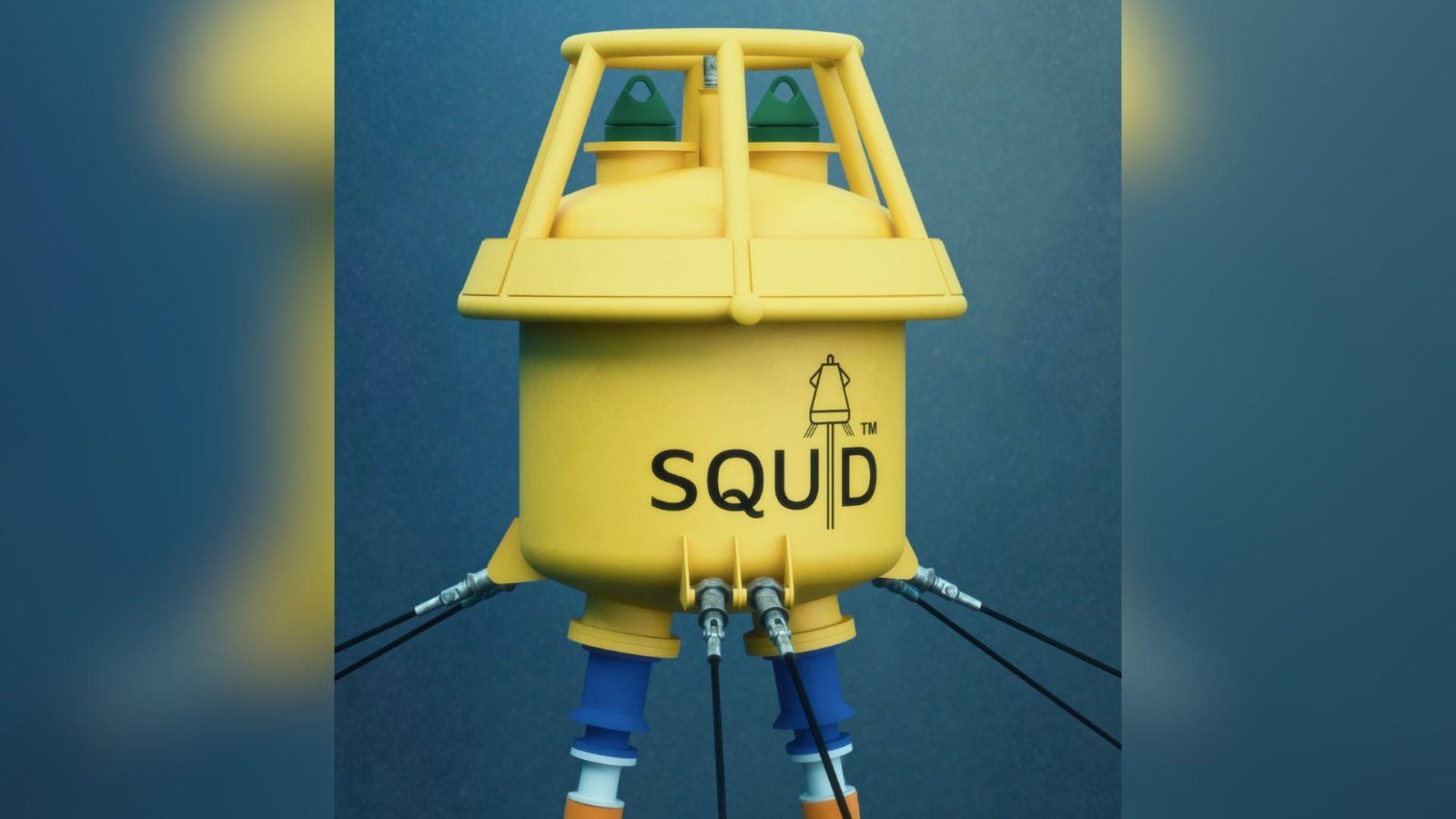
ABS completed a detailed review of the Squid system against class and industry requirements for floating offshore wind applications. The PDA follows Squid’s AIP certification received just seven months ago and represents the next step in the qualification pathway towards Technology Readiness Level assessment and commercial adoption. A series of onshore demonstrations are scheduled for July at the Aurora Energy Services (AES) facility in Huntly, followed by inshore wet testing and customer demonstrations at Ardersier, in August.
Encomara was founded in 2023 by four industry stalwarts including the original patent holder Malcolm Bowie, each with more than 30 years’ energy sector experience and was subsequently acquired by AES, one of the UK's fastest growing renewable energy services businesses, in 2025.
Encomara’s managing director Ian Donald, who has previous experience in the commercialisation of new patented technologies in the energy sector, said: "The Squid system allows pre-installation of moorings and cables followed by rapid hook up of the FOWT , thus reducing risk and potentially doubling the number of turbines that can be installed in a typical season , which tackles a key constraint in GW scale floating wind farm completion. We are drawing on our collective North Sea marine and engineering experience and applying it directly to one of the most pressing challenges in energy transition. To reach this milestone is a testament to the team at Encomara and Aurora Energy Services.
"Moving into live testing is the next significant step. We developed this technology in Scotland, and we are building and qualifying it in Scotland. The ambition is for it to be operating in floating wind projects across the world."
Rob Langford, ABS Vice President for Global Offshore Renewables, added: "Some of the most practical solutions for floating wind will come from what has been proven to work in the traditional offshore sectors and adapting it to the unique risk profile of offshore wind. ABS is proud to support Encomara in bringing that approach to this sector, and this assessment reflects the technical depth behind it."
Squid is supported by Scottish Enterprise and the Offshore Wind Growth Partnership and patents are secured across Europe, Asia and Australia. AES’ Huntly facility has been identified as a potential site for high-volume manufacturing as the technology scales towards commercial deployment.