Business leaders, trade unions and charities have warned MPs that the North Sea energy transition risks leaving workers and communities behind unless government policy changes.
Giving evidence to the Westminster Energy Security and Net Zero Committee during its visit to Robert Gordon University yesterday, witnesses called for a more pragmatic approach that supports existing oil and gas jobs while accelerating investment in low-carbon industries.
The committee travelled to Aberdeen to hear directly from workers, businesses and community organisations about their experience of the UK's energy transition and the future of the North Sea.
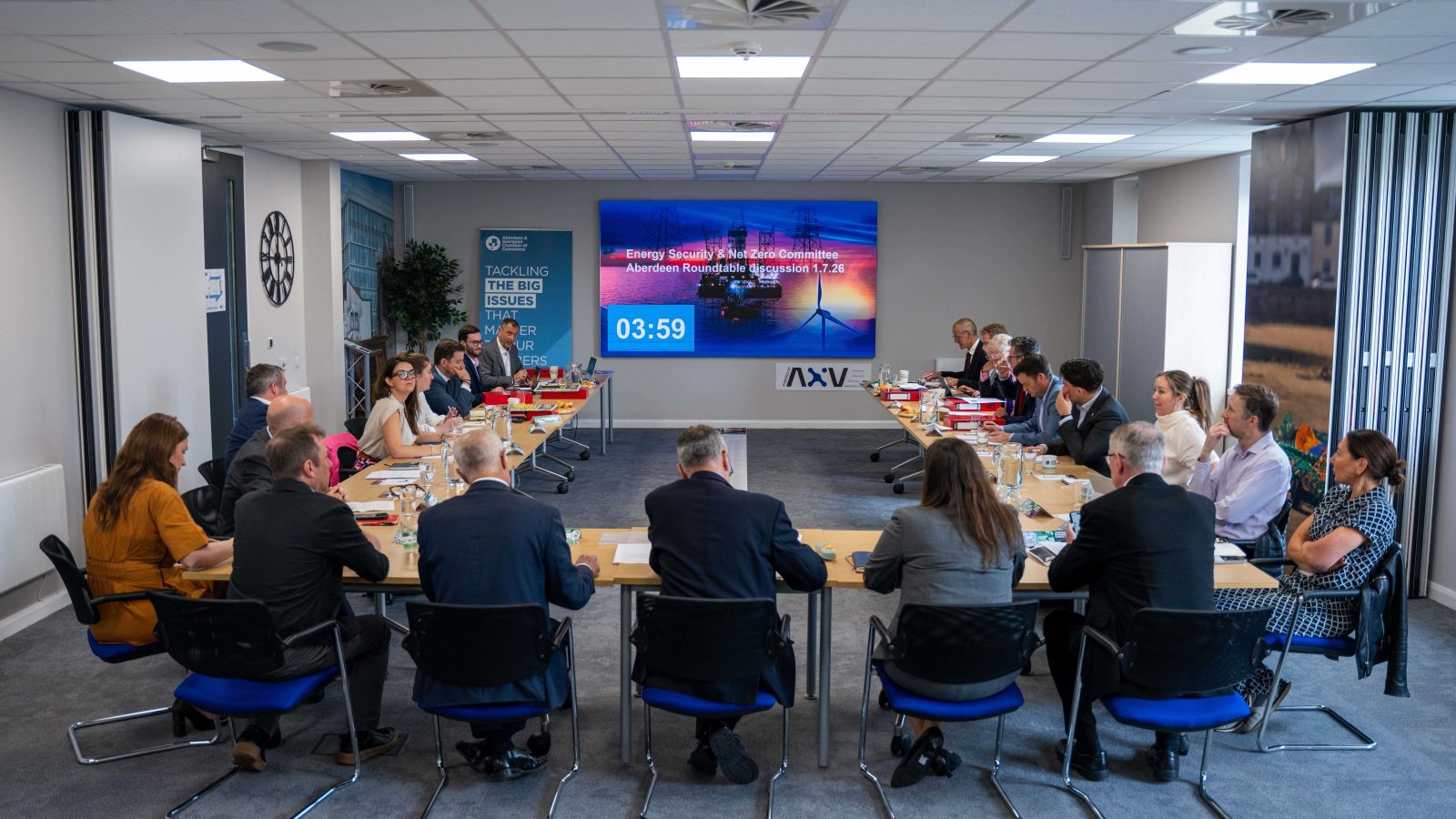
The trip included a morning at Aberdeen & Grampian Chamber of Commerce, where the committee met with a wide range of industry stakeholders to hear the current state of play in the North-east.
The session brought together leaders from across oil and gas, offshore wind, ports, professional services, academia, enterprise and economic development ahead of the committee's formal evidence session at Robert Gordon University.
Representatives from AGCC, the British Chambers of Commerce, Jobs Foundation, Port of Aberdeen, Harbour Energy, BP, EnQuest, Peterson Energy Logistics, ETZ, Scottish Renewables, EY, Johnston Carmichael, pdi, the University of Aberdeen, Ventex Studio, Adura Energy and True North Advisors discussed the pace of the energy transition, the investment climate, skills, employment, energy security and the policy changes needed to support long-term economic growth in the region.
Giving evidence later in the afternoon, Aberdeen & Grampian Chamber of Commerce Chief Executive Russell Borthwick said Andy Burnham should avoid repeating the mistake of his predecessor, Sir Keir Starmer, who did not visit Aberdeen during his two years as Prime Minister, other than a short trip to meet the US President coinciding with the opening of the new Trump golf course.
Mr Borthwick said: "Sadly, other than this, his predecessor hasn't made it [here] since he's been Number 10."
He added that while he welcomed Aberdeen being referenced in Mr Burnham's recent speech, he rejected any suggestion the city should be considered as a post-industrial economy.
"The economy here is still relatively strong, or could be strong," he said.
"This does not need to become a post-industrial region. We still have it within our power to not make that happen."
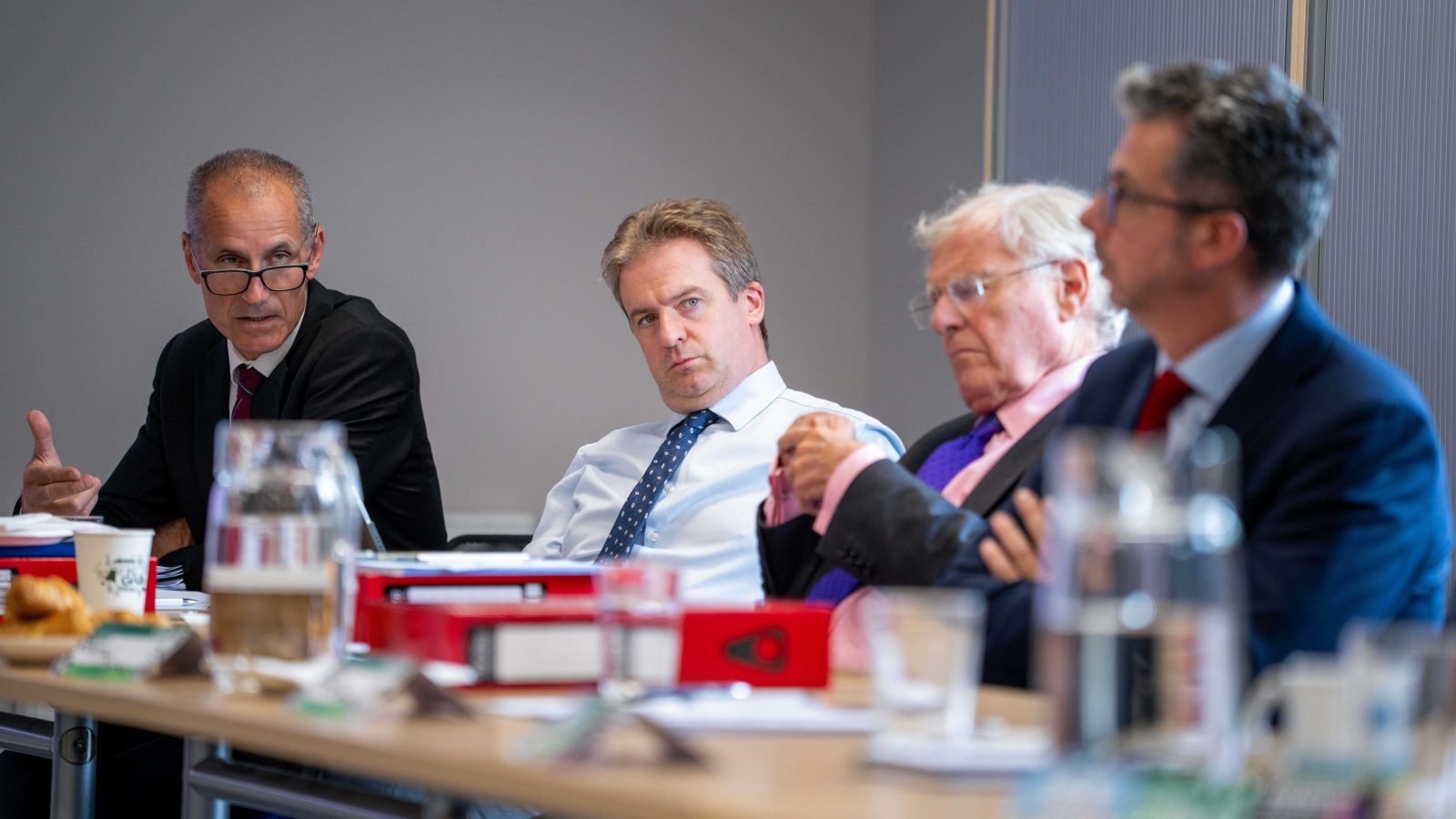
Mr Borthwick warned that replacement jobs are not yet being created quickly enough.
He added: "At the moment, the gap between old energy technologies and new energy technologies is big, and we're not closing that fast enough. There will be jobs to transition into, but right now there aren't.
His comments were echoed by Richard Hardy, Prospect's national secretary for Scotland and Ireland, who warned skilled workers were increasingly leaving the UK.
"We need an industrial strategy to counteract this view that these jobs – the low-carbon, renewable jobs which have been promised and promised by politicians – are so far over the horizon," he said.
The committee also heard about the wider social impact of the downturn from Aberdeen Cyrenians chief executive Donna Hutchison, who said charities were already dealing with the consequences of job losses.
"We are always the ones that pick up the response, the ones that pick up the pieces. And at no point have we been engaged in this conversation," she said.
She added that the transition should be "designed around real people not just the sector".