Speakers from Great British Energy, LCCC, NSTA, Bureau Veritas and Penta Global discuss investment, decommissioning, supply chains and the growing focus on energy security and sovereignty at EEC 2026.
Energy industry and policy leaders gathering in Aberdeen this morning at the EIC’s Energy Exports Conference shared a pragmatic optimism about the state of the energy industry in the UK and beyond as they discussed themes ranging from energy security and sovereignty to investment confidence and supply chain capability. Executives from UK government-linked bodies showed how, in practice, governments can drive investment through direct investment and facilitating mechanisms.
Opening the conference, Stuart Broadley, EIC CEO, said that we’re seeing nations around the world moving not just towards secure energy policies, but towards sovereign energy policies.
“Energy, grid, infrastructure, defence and AI and data centre markets around the world are booming, but uncertainty is everywhere,” he said at the opening session. “Making smart decisions is, more than ever, about picking not just good technologies or projects, but about picking the right partners. It is in this context that we curate the 2026 edition of the Energy Exports Conference.”
He added: “For companies in the energy supply chain, opportunities will continue to come from both domestic and international markets, and EIC’s Survive & Thrive research shows that diversification and innovation continue to be the most important strategies for growth.”
Dan McGrail, CEO, Great British Energy, said GBE sees itself as an activist investor with a public purpose. It still has to invest commercially and see a route to a return, but as a publicly owned company its investments also need to deliver additionality.
Its strategy combines project development and investment across local, onshore and offshore energy, alongside a £1bn UK supply chain programme, he said at the EEC’s opening session, titled “From Risk to Resilience, Securing the Future of Global Energy”.
McGrail said he wants Great British Energy to use its capabilities and investments to help companies diversify and transition, creating UK champions that can ultimately export their products and expertise.
Investments in companies and projects such as Naked Energy and Pentland Floating Offshore Wind Farm are part of that effort to build domestic capability in emerging clean-energy industries.
Discussing Allocation Round 8, Neil McDermott, CEO, Low Carbon Contracts Company (LCCC), said demand for Contracts for Difference remains strong. AR8 applications are now being assessed, and the government has greater flexibility to consider anonymised bids and adjust budgets across a wider range of technologies.
The CfD remains attractive to investors because it provides a long-term, inflation-linked strike price and contractual protections such as force majeure and change-in-law provisions, he said.
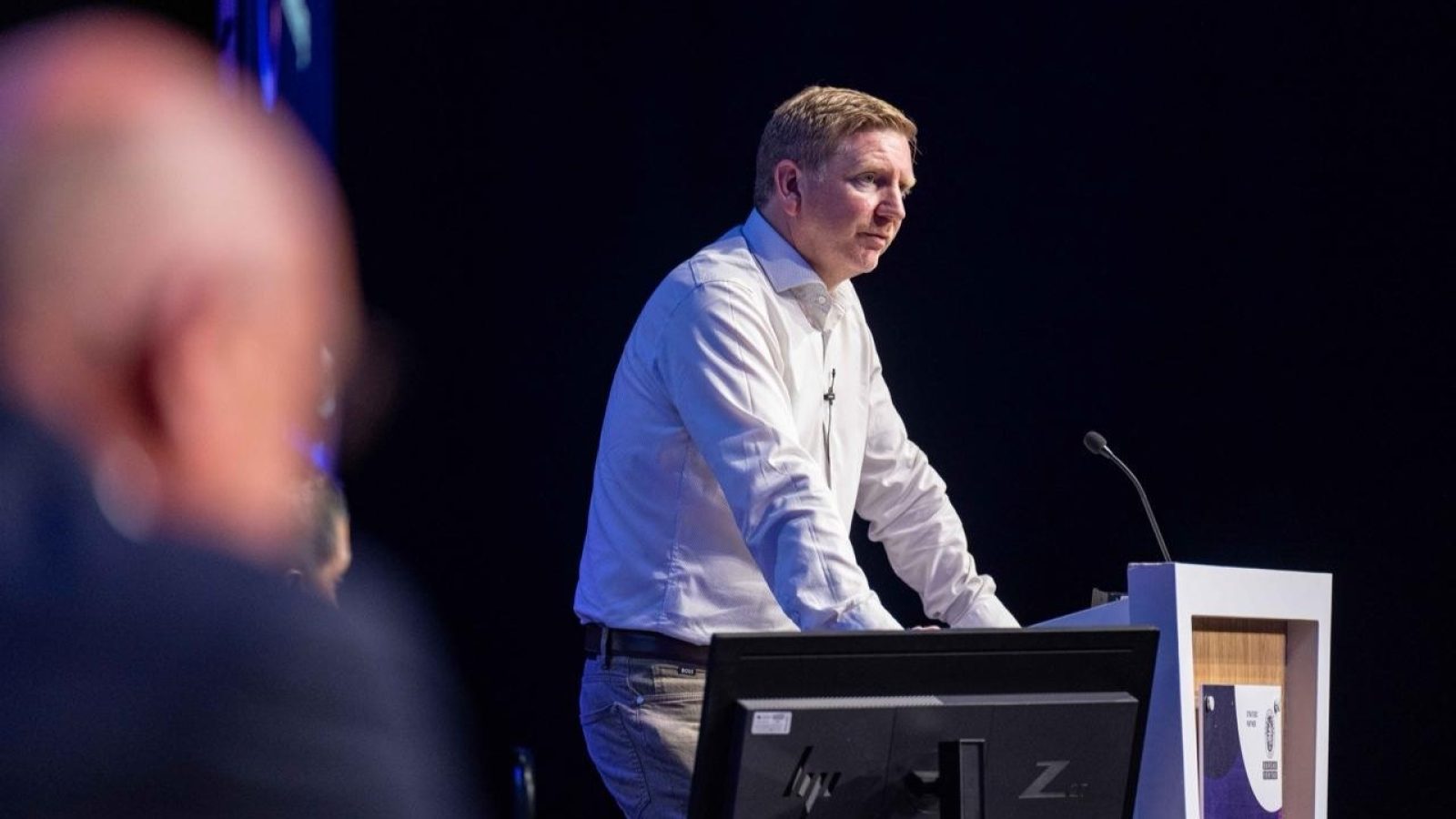
From Allocation Round 7, CfD terms for several technologies were extended from 15 to 20 years. McDermott said this better aligns contracts with asset lives and can help spread costs over a longer period.
“If you’re an investor, that’s a very attractive structure,” he said.
Pauline Innes, Director of Supply Chain & Decommissioning, North Sea Transition Authority, was pragmatically optimistic about the North Sea and its role in the energy transition.
The UK Continental Shelf is a mature basin, with more assets approaching the end of their lives. That creates a relatively visible pipeline of decommissioning work, giving investors and the supply chain a degree of certainty.
The NSTA’s role is to provide enough structure and visibility to build confidence in future decommissioning activity and expenditure. Its aim is a practicable UK spend curve, with operators sticking more closely to agreed timelines.
Innes said there is a major opportunity for UK companies, both from domestic decommissioning work and from exporting North Sea expertise internationally.
She also called for a stronger focus on securing value in the UK, including clearer government expectations around in-country content.
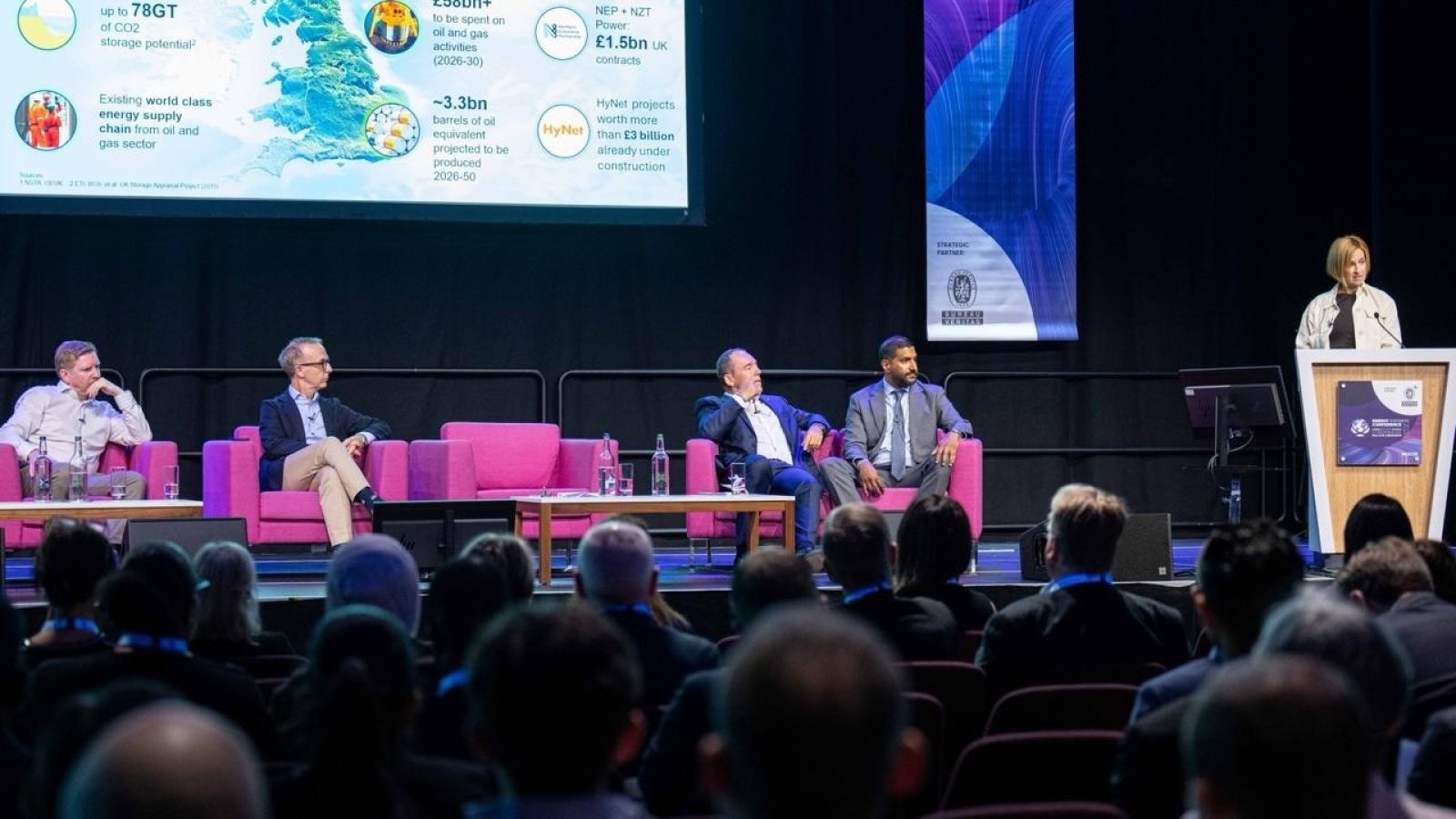
Her North Sea opportunities slide showed £125bn+ of expenditure across oil and gas, offshore wind, CCS and hydrogen to 2030, alongside £58bn+ of oil and gas expenditure between 2026 and 2030 and £21bn of forecast decommissioning spend between 2026 and 2032.
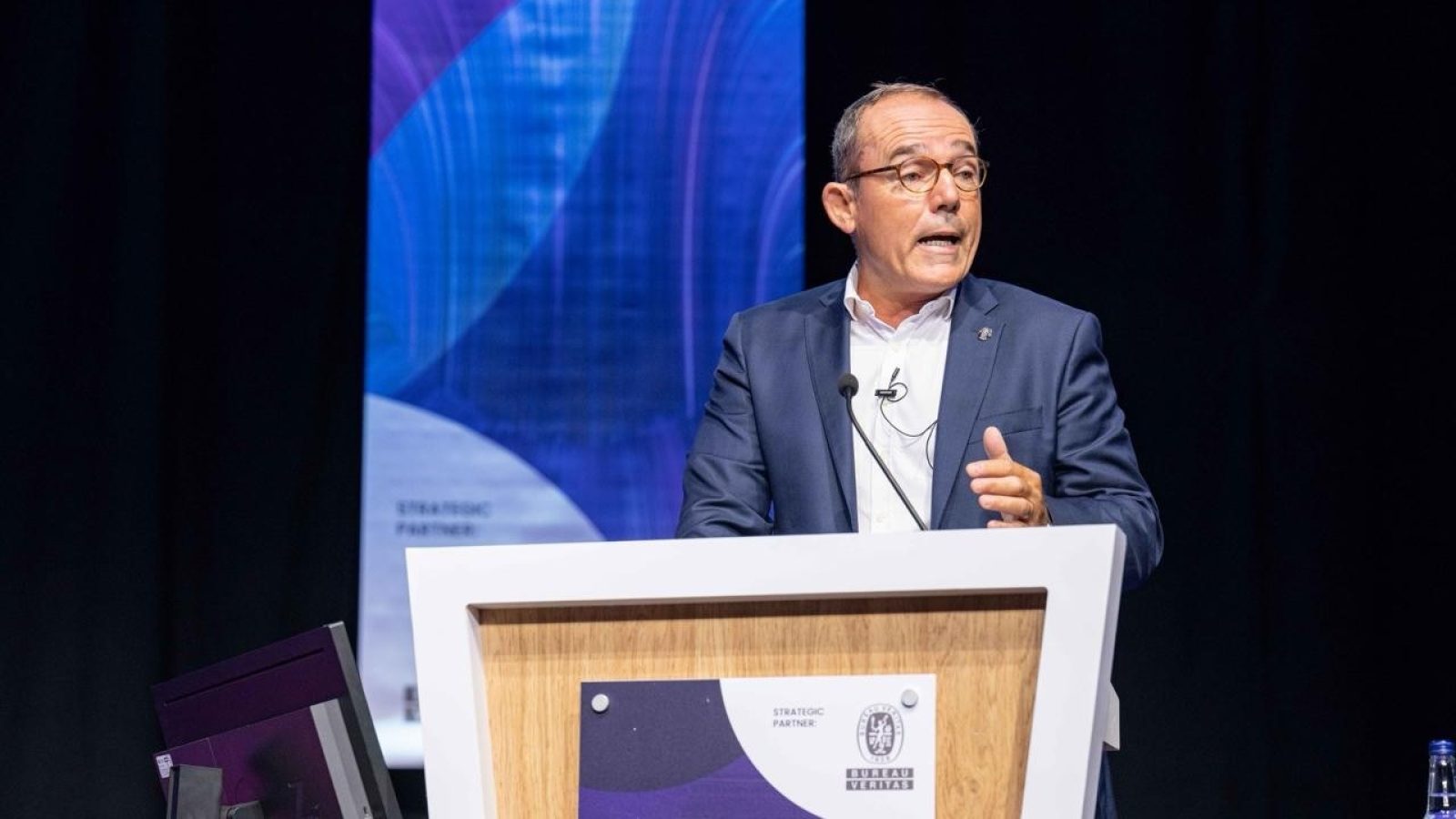
Bertrand Martin, Senior Vice President, Industry Product Line, Bureau Veritas, argued that the energy transition needs to remain ambitious while also being pragmatic and protecting energy sovereignty.
He said the debate cannot simply be reduced to conventional versus newer forms of energy. Both will be needed while countries secure energy supplies and move towards lower-carbon systems.
Technology alone will not deliver the transition. Investors and operators also need confidence that assets will operate safely and reliably.
Energy sovereignty, he said, is now a global issue rather than one confined to Europe or the UK.
Collaboration is equally important. No single company or stakeholder can deliver the transition alone, and expertise from mature energy industries needs to carry across into newer technologies.
Sujay Nair, Executive Director, Penta Global, described a UAE market with a large pipeline of work across oil and gas and newer energy projects, putting the opportunity at around $50bn through 2030.
As an EPC contractor, Penta is looking at how it can support those projects while continuing to invest in localisation and bring new skills into the region. Nair said this has been under way for years in what is already a mature energy market.
Recent conflict has brought energy security back into focus, including conventional infrastructure and routes such as pipelines to Fujairah.
Nair said confidence is returning in the UAE and that he expects the scale of activity to grow further as geopolitical tensions ease.
He also expects further production growth following the UAE’s departure from OPEC, creating additional opportunities for contractors and the wider supply chain.
“There is so much work in the UAE,” he said.
EEC is the EIC’s flagship conference that connects the energy supply chain with operators, policymakers and other stakeholders to learn about and explore new export opportunities.