First Minister John Swinney and other senior politicians yesterday met with Aberdeen & Grampian Chamber of Commerce and energy leaders to discuss removing the windfall tax and reviving the North Sea.
The roundtable event, hosted by ETZ Limited, was also attended by Energy Secretary Gillian Martin.
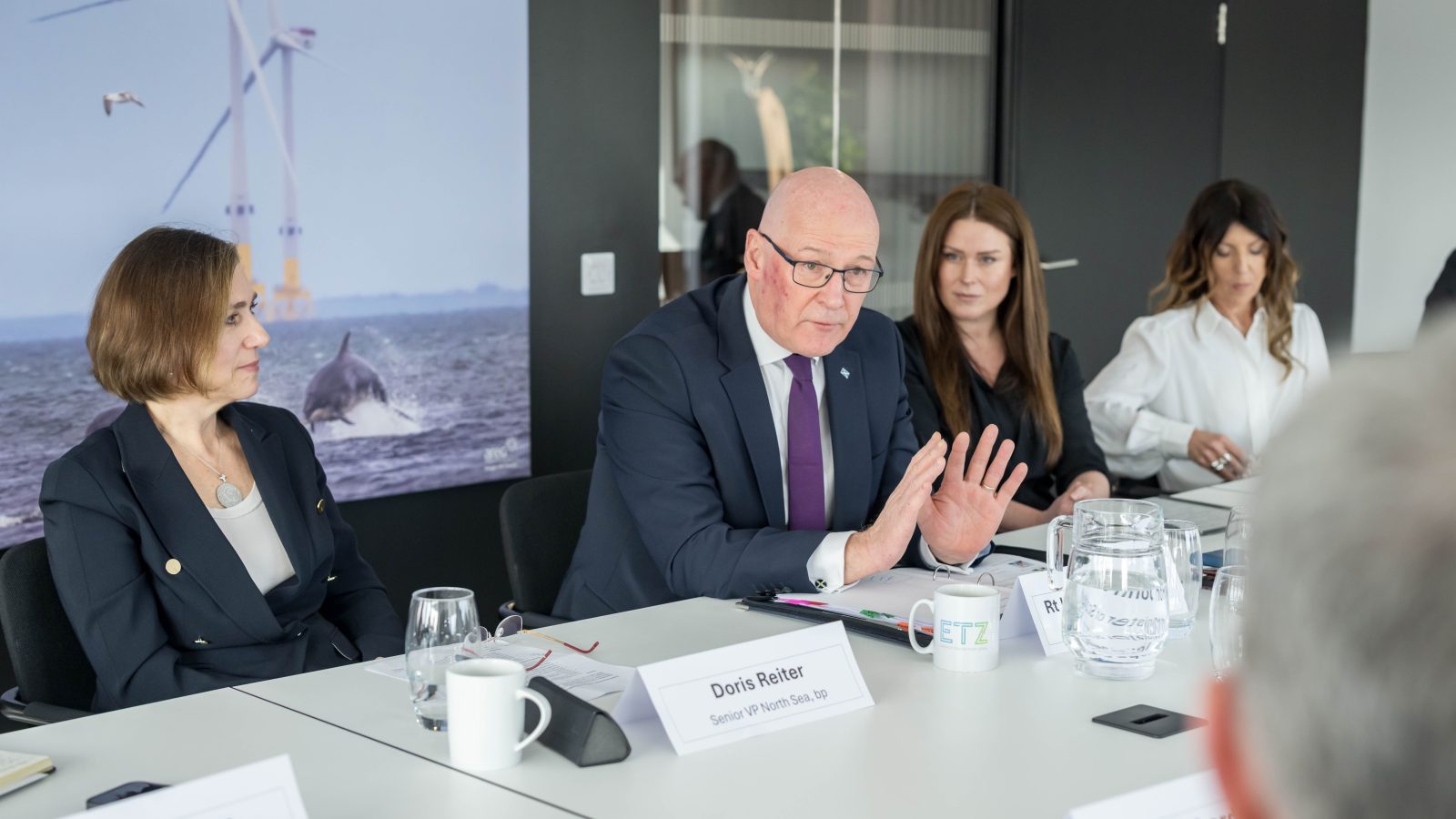
They joined business leaders from oil and gas companies, offshore wind developers and supply chain representatives to discuss issues including the role the North Sea can play in bolstering European security of supply amid the ongoing global energy crisis.
Other topics included the ongoing fiscal negotiations and need for an urgent move from EPL to OGPM, getting North Sea projects moving by unblocking regulatory logjam, future licensing including the need to move swiftly to legislate on tiebacks, bolstering supply chain confidence in uncertain times and the impact of current policy on the wider regional economy.

As reported in the Press & Journal, Mr Swinney later warned of a “palpable sense of betrayal” in the North-east over UK government energy policy adding that the Energy Profits Levy “has to go”.
Mr Swinney said he had hoped for an “elegant and just transition” but warned oil and gas production output was falling faster than expected while accepting that renewable capacity was not coming online quickly enough to replace it.

The Chamber and partners will continue to make the case for policy change, presenting evidence of the risks of current direction and suggesting solutions.
Mr Swinney's comments come as he visited The James Hutton Institute, Scotland’s pre-eminent interdisciplinary scientific research institute for the sustainable management of land, crop and nature resources, for the official launch of the Hutton Hub.
Based at the Hutton’s Craigiebuckler campus in Aberdeen, the Hub is a multi-million-pound development offering a space for academics, businesses and the public to work towards a just-transition to net zero through collaboration and cutting-edge technology.
Financed by the Scottish Government’s Just Transition Fund, the Macaulay Development Trust and the UK Department for Science, Innovation and Technology, the Hub features top-of-the-range technology and facilities which are available for businesses and the public to hire.
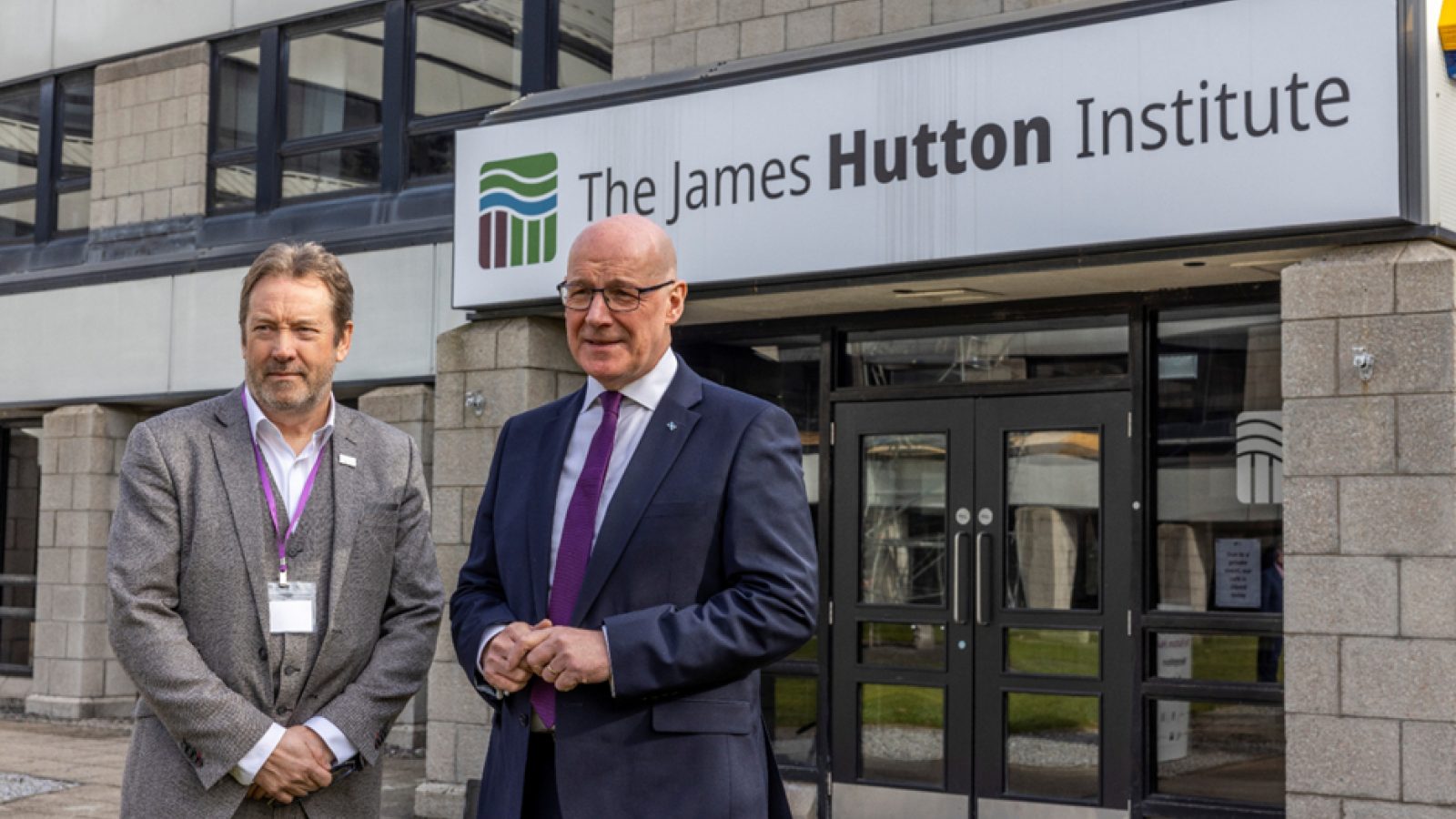
The First Minister joined Hutton CEO Professor Colin Campbell and guests from Scotland’s business and academic communities for a tour of the facilities, which include two spacious lecture theatres, a podcasting suite, VR and augmented reality headsets, touchtables, a video and sound editing suite and an open science café where members of the public can drop by to grab a coffee and learn more about the Hutton’s research.
However, the highlight of the tour was the Hutton Hub’s 360-degree Immersive Suite, which is equipped with a media server, a games engine and surround sound - allowing for videos, graphics, models and simulated environments to be projected on all four walls in an all-encompassing experience.
In the Immersive Suite, the First Minister saw how the space can be used to simulate different scenarios, adding and removing elements and generating landscapes and graphics.
In addition to experiencing the ground-breaking technology, the First Minister learned about how biophilic design and recycled materials were used in the Hub’s construction to incorporate the Hutton’s ethos of sustainability and harmony with nature.
The Hutton plans to grow the Hub into a net-zero hotspot where businesses, community groups, researchers and spin-in/spin-out companies can work together on initiatives relating to net zero.
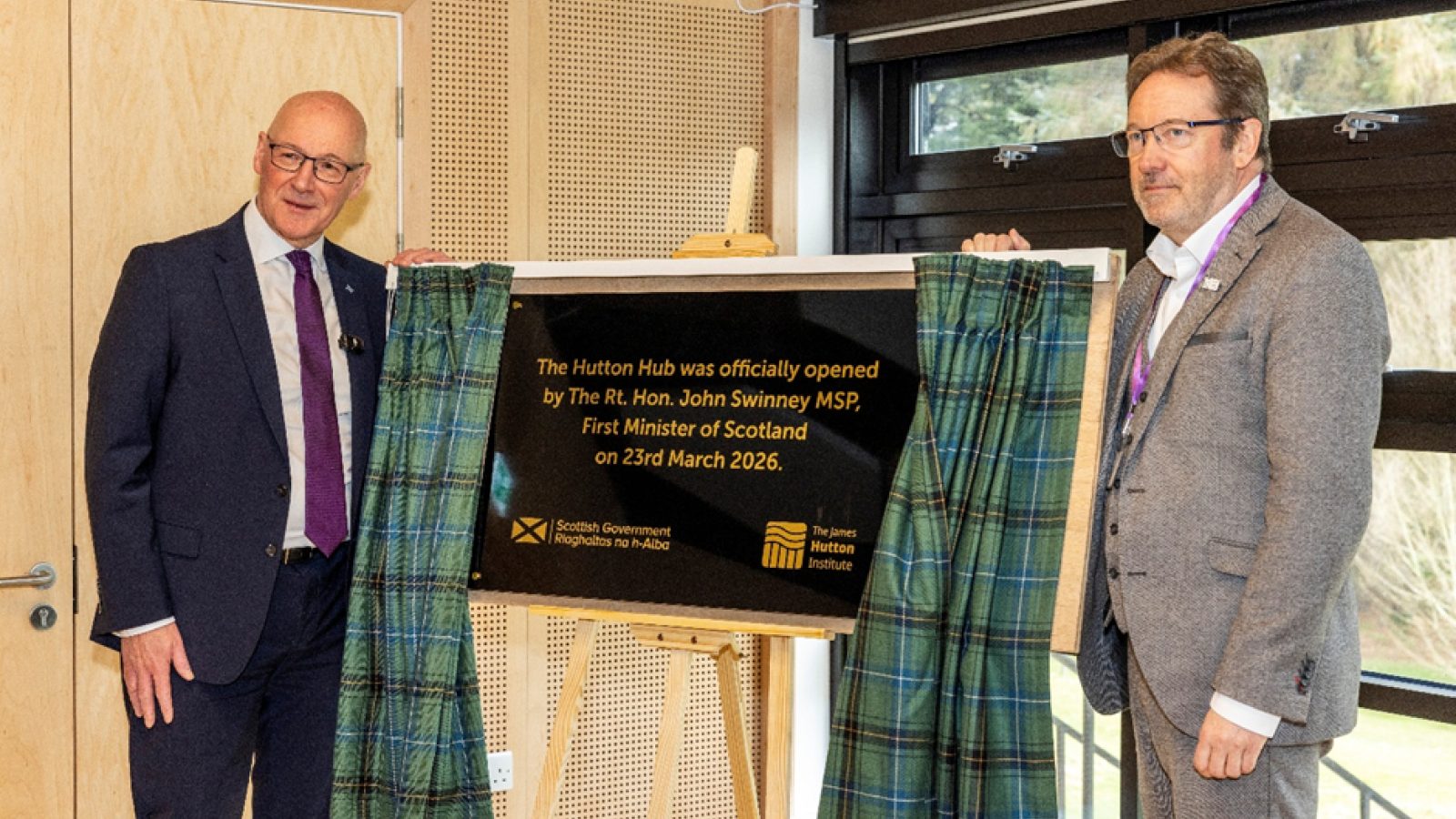
The First Minister said: “The James Hutton Institute is at the forefront of driving net zero innovation in Scotland, using expertise in science and technology to respond to the challenges posed by climate change. Supported by over £7million of Scottish Government funding from the Just Transition Fund, the new Hutton Hub in Aberdeen will provide a state-of-the-art centre for scientific excellence for the North-east, offering training and expanding capacity for green economic development.
"The Hub will create six new direct jobs and aims to support around 200 more across The James Hutton Institute and partner organisations. This shows that driving economic growth and tackling the climate emergency go hand-in-hand, helping create green jobs for the industries of the future.
“My government’s Climate Change Plan will be delivered to Parliament later this week, setting out how Scotland will reduce its greenhouse gas emissions over the next 15 years. Businesses, of course, have a key role to play in this, and The James Hutton Institute is setting a strong example of how research institutes and companies can work together to maximise the opportunities presented by the transition to a greener economy.”
Professor Campbell added: “We are facing huge change in the future and, in order to get that change right and generate solutions which benefit everyone, it is essential that we find new ways to engage and collaborate. The Hutton Hub was created to bring people together in a way which stimulates ideas, innovation and consensus building - putting the ‘Just’ in Just Transition.”