Scientists, farmers and food industry leaders from across the UK and beyond will gather next week at The James Hutton Institute for the third annual meeting of the UK Legume Research Community (UKLRC), a three-day conference focused on unlocking the potential of legumes to support climate action, food security and sustainable farming.
Taking place from 5th to 7th May, the meeting is built around a simple idea with far‑reaching implications: growing more legumes, a group of plants that includes beans, peas, lentils and clovers, could play a major role in transforming UK agriculture. Rich in protein and central to healthy diets, legumes also improve soil quality, support pollinators and other beneficial insects, and reduce pollution entering rivers and waterways.
Legumes have a unique ability to work with naturally occurring soil bacteria to capture nitrogen from the air and convert it into plant nutrients. This natural process enables farmers to reduce, or even avoid altogether, using synthetic nitrogen fertilisers, cutting costs and greenhouse gas emissions while improving soil health.
“Legumes are hidden in plain sight,” said the Hutton’s Professor Pete Iannetta, a founding member of the UKLRC and head of the conference organising committee. “They offer solutions to some of the biggest challenges we face, from climate change to food security, but they’re still not widely used. This meeting is about bringing people together to change that.”
The Hutton is a world leading research institute addressing the issue of global food security by finding scientific solutions for the sustainable management of land and natural resources and the demands for improved agricultural productivity and crop resilience.
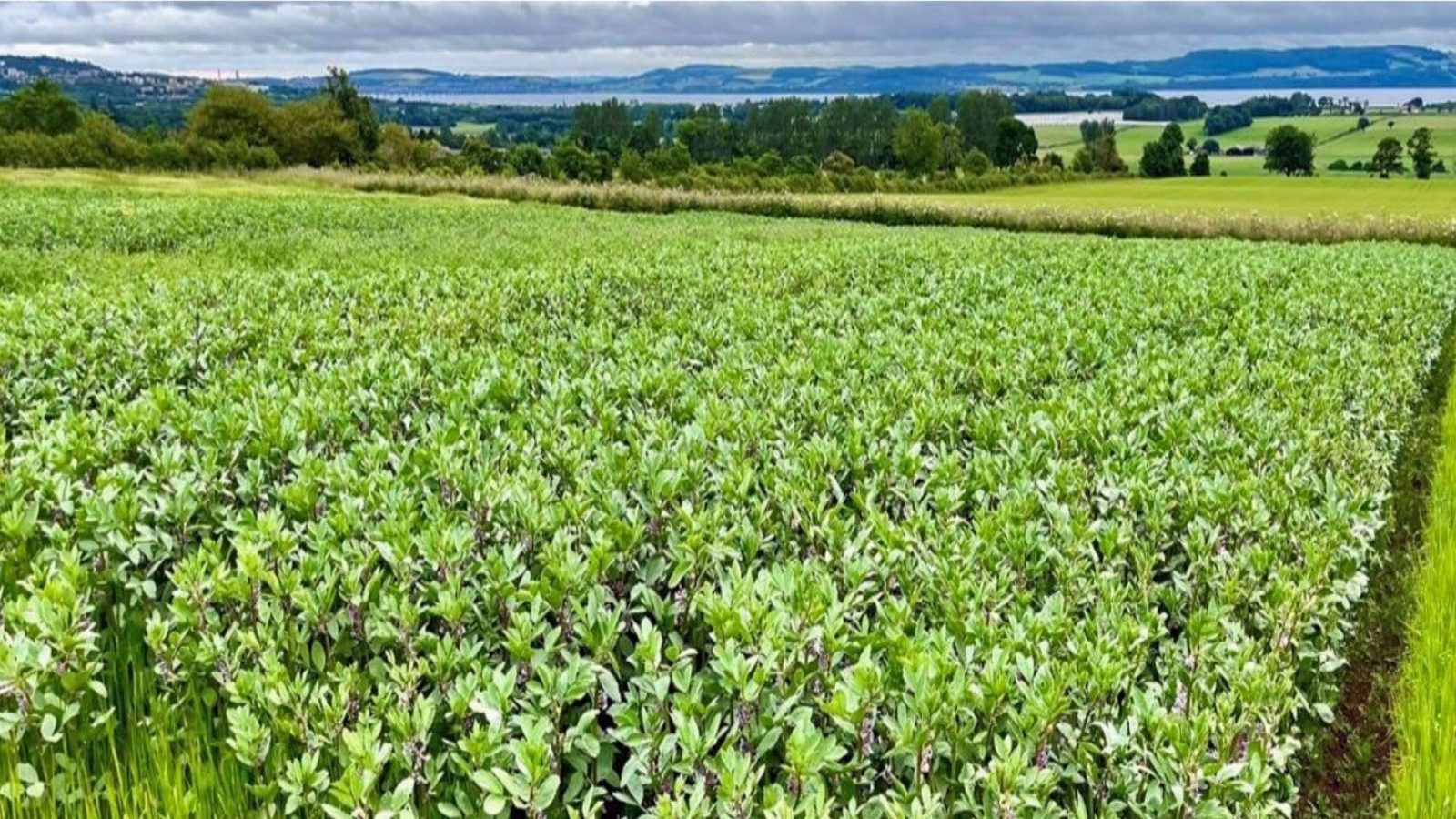
Faba beans growing at The James Hutton Institute
Climate change and geopolitical instability have highlighted the UK’s reliance on imported food, particularly plant‑based protein. Increasing the production and use of home‑grown legumes could help reduce that dependence while strengthening the resilience of farming systems.
The three-day event will explore the full legume value chain, from plant biology and resilience to climate stress, on‑farm use, food and feed applications to national policy. Dedicated sessions will explore how the UK could develop a more coordinated strategy for producing plant‑based protein domestically.
Designed for a broad audience across the food and feed system, including farmers, processors, retailers, policymakers and researchers, the meeting will also provide a platform for students and early‑career scientists to present their work and engage with experts in the field.
One of the meeting’s headline speakers, Professor Ken Giller of Wageningen University in the Netherlands, will argue that nitrogen-fixing legumes are “the heartbeat of regenerative agriculture”, a farming approach that aims to restore soil health and reduce environmental impact.
Specialist workshops will focus on emerging areas of innovation, including new breeding approaches such as gene editing in pulse crops. The National Alternative Protein Innovation Centre (NAPIC), whose co-director, Professor Derek Stewart, leads the Hutton’s Advanced Plant Growth Centre (APGC), will lead discussions on how legumes fit into the fast‑growing alternative protein sector, spanning plant‑based foods as well as products derived from algae and fungi.
Participants will also visit the Centre for Sustainable Cropping at the Hutton, a commercial‑scale arable farm established in 2009 to test practical approaches to regenerative agriculture. Legumes play a central role in the system, helping to improve soil health, reduce fertiliser inputs and maintain crop yields.
The conference aims not only to highlight benefits of legumes, but also to tackle real‑world barriers to growing them, including inconsistent crop performance, limited supply chains and lower profitability compared with dominant crops such as wheat and barley.
As the UK looks to build a more secure and sustainable food system, the message from this year’s meeting is that solutions may already exist in crops that have been overlooked for decades.