Researchers led by the University of Aberdeen and the Muséum National d’Histoire Naturelle (France) have found new evidence that Neanderthals may have used rhinoceros teeth as tools, opening an unexpected new chapter in our understanding of prehistoric technology and resource use.
The study, published in the Journal of Human Evolution, is the first detailed multidisciplinary investigation into whether rhinoceros teeth formed part of the Neanderthal toolkit.
Archaeologists have long known that Neanderthals hunted, butchered and consumed rhinoceros across Europe. But until now, there had been no clear evidence that the animals’ teeth were deliberately selected and repurposed as tools.
The project brought together multidisciplinary specialists from different institutions, including those in the United Kingdom, Spain and France. The research was co-coordinated by Dr Alicia Sanz Royo, from the University of Aberdeen (Scotland) and Dr Juan Marín Hernando from the Universidad Nacional de Educación a Distancia (Spain) and mainly funded through the RINO Project (Sorbonne Université), led by Dr Camille Daujeard from the Muséum National d’Histoire Naturelle (France).
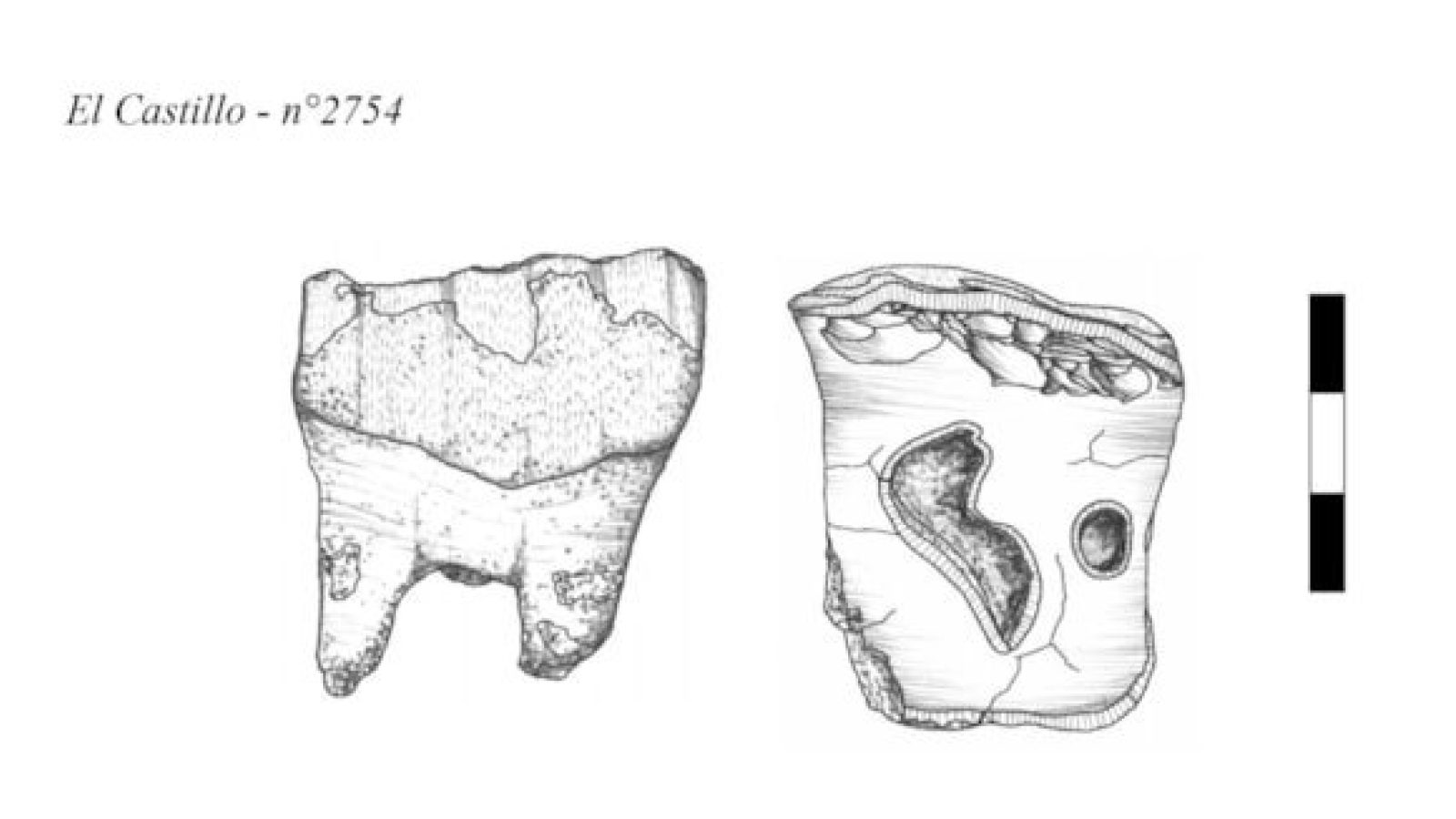
The team examined rhinoceros teeth from 12 Middle Palaeolithic archaeological sites in Spain and France, comparing them with fossils from paleontological assemblages and modern reference collections. They also carried out experimental testing to distinguish marks caused by natural processes from those produced by deliberate human activity.
Their results identified recurring traces and fractures on rhinoceros teeth from two key archaeological sites at El Castillo Cave, in northern Spain, and Pech-de-l’Azé II, a rock shelter in the Dordogne region of southwestern France, in which Neanderthal occupations have been documented
The marks were unlike damage caused by carnivores, chewing activities during the life of the animals, or natural processes, like abrasion or sediment pressure, but closely matched traces produced during archaeological experiments. Researchers believe the origin of these marks may be related to the use of teeth as soft hammers or anvils when working hard materials, such as stone tools.
Dr Alicia Sanz Royo, from the University of Aberdeen, said: “Neanderthals not only exploited animals for food, but also reused their remains for different purposes, including as raw materials for tool production. Our findings suggest rhinoceros teeth may have been part of this toolkit, expanding our understanding of Neanderthal technology and subsistence strategies. What makes this discovery particularly exciting is that it shows Neanderthals were highly adaptable in how they exploited the available resources. They selected and reused parts of their prey, including megafauna like rhinoceros, which implies complex organisational, technological and cognitive abilities.”
Dr Juan Marín Hernando added: “The discovery suggests Neanderthals may have exploited animal resources in more diverse ways than previously recognised, expanding the range of organic materials into their toolkit-. Archaeological research and experimental approaches are helping to lead cutting-edge studies into prehistoric behaviour and human evolution.”
The open-access paper, Elucidating the use of rhinoceros teeth by Neanderthals: Between experiments and the fossil record, is available via DOI: 10.1016/j.jhevol.2026.103829.