The James Hutton Institute is delighted to announce that three of its PhD students have been invited to take part in Graduate Women Scotland East’s latest event, The Future of Barley: Resilience against climate change, on Tuesday April 28.
PhD students Alanna McCutcheon, Ella Southin and Shanzay Qamar will present their research on barley resilience and the impacts of climate change, followed by a panel discussion chaired by Bella Perez, Head Brewer at 71 Brewery.
All three researchers work within the International Barley Hub (IBH), which is hosted by the Hutton and promotes scientific discovery and innovation to safeguard the future of barley. As Scotland’s predominant crop, barley underpins major food, feed and drink industries. Against the backdrop of climate change, increasing environmental pressures and rising global demand, research into barley genetics and breeding is critical to maintaining productivity and sustainability.
Alanna’s research focuses on improving barley’s ability to survive and thrive under increasingly unpredictable climatic conditions. She is particularly keen to communicate the importance of this work beyond academia.
“Plants can’t move to escape difficult conditions, so they adjust their developmental programme in response to dynamic environmental change,” she explains. “However, this flexibility has not traditionally been considered when growing crops in the field.
“I am studying a barley line that shows an unusual response to short bursts of heat and drought. When exposed to these stresses, the plants temporarily stop developing altogether, only resuming growth once conditions improve. Surprisingly, these plants produce more grain by the end of the season than those that continue growing during stressful conditions.”
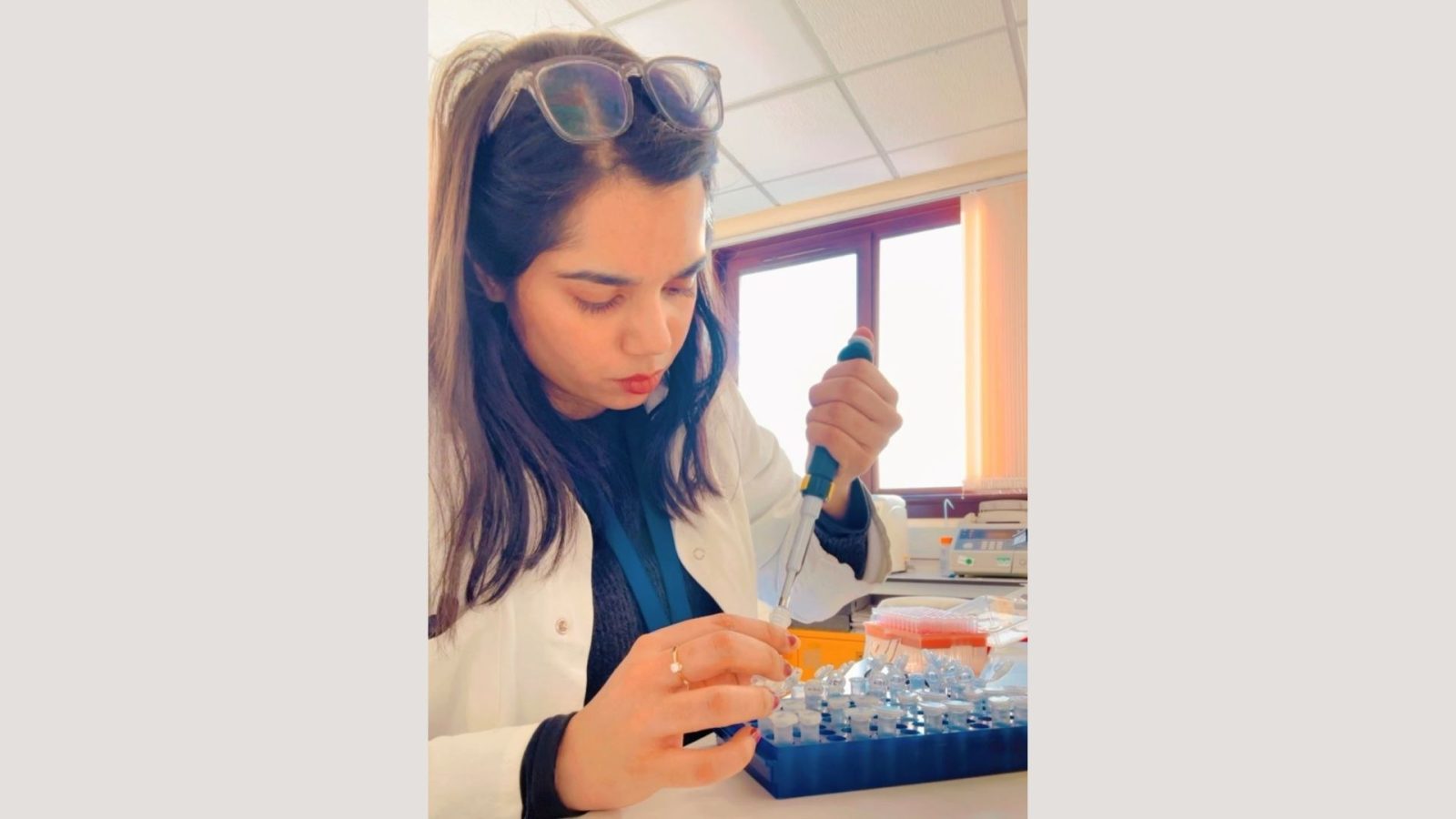
Ella’s research explores how hybrid breeding systems could transform barley production and meet the evolving needs of the whisky distilling and brewing sectors.
Her work focuses on identifying genetic male sterile mutants that could enable hybrid barley breeding. “Hybrid offspring consistently outperform their parent lines across key measures such as yield and tolerance to biotic and abiotic stresses,” she explains. “While hybrid systems are widely used in other crops, barley is naturally self‑fertilising, which makes hybrid breeding particularly challenging.
“My research aims to overcome these biological barriers and unlock more resilient, efficient barley varieties with diverse traits tailored for distilling and brewing.”
Shanzay’s research centres on gene editing and its potential to deliver precise improvements in barley performance. For her, the event also represents an opportunity to champion women in science.
“Representing women in science means a lot to me,” she said. “I come from Pakistan, where only three to four per cent of women progress to tertiary level education. I’m also keen to challenge public misconceptions around gene editing.
“Gene editing allows us to make extremely precise changes to a plant’s genes to improve traits like yield, quality and disease resistance. In barley, this is particularly challenging as varieties relevant to distilling and brewing are often the hardest to work with for gene editing.”
Graduate Women Scotland works to advance understanding of how women‑led research can drive effective climate action, while supporting the education and advancement of women and girls within local communities.
This event will highlight the real‑world impact of academic research by connecting scientific innovation directly to the brewing and distilling sectors.
It is taking place on Tuesday 28th April at Canvas, Ure Street, Dundee, 12 -2.30 pm. Tickets are available here