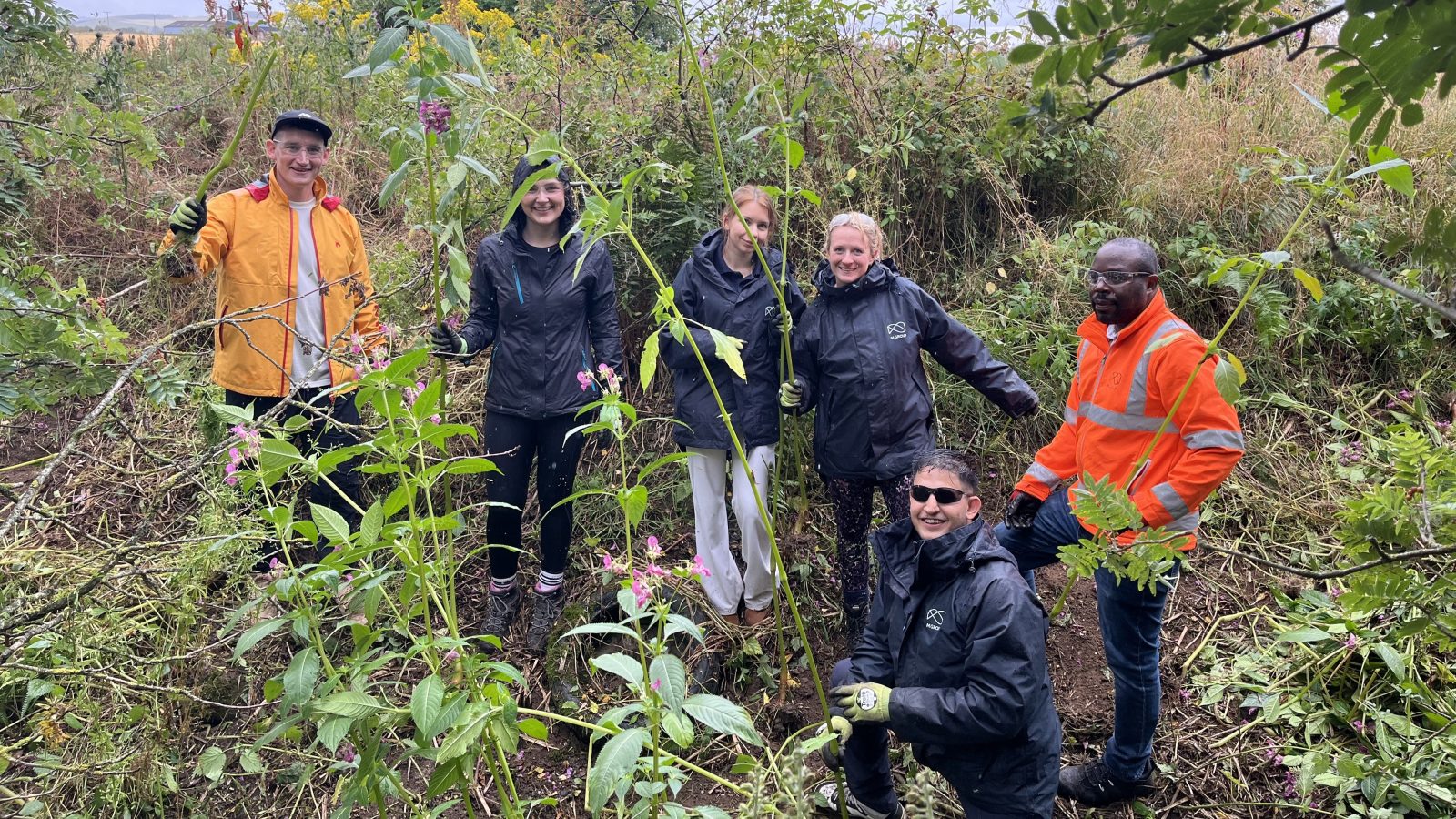
Green-fingered volunteers from SSEN Transmission have been helping to protect and enhance the environment around the River Dee by supporting efforts to remove an invasive non-native plant species from the riverbank.
The team, joined by colleagues from M Group, partnered with the River Dee Trust to tackle Himalayan Balsam along the Dess Burn, between Aboyne and Kincardine O'Neil.
Despite its attractive appearance, Himalayan Balsam can have a significant impact on local ecosystems. The plant spreads rapidly, forming dense stands that outcompete native vegetation. Its shallow root system also does little to stabilise riverbanks, increasing the risk of erosion.
Working alongside River Dee Trust volunteers, the team removed a substantial amount of Himalayan Balsam from the area by hand, contributing to ongoing efforts to restore and protect the river's natural habitat.
Rob Whytock, Community Liaison Manager from SSEN Transmission, said: “We are committed to leaving a positive legacy in the communities where we operate, and it was fantastic to work alongside the River Dee Trust and our colleagues from M Group on this important initiative.
“By helping remove Himalayan Balsam, we have played a small but meaningful role in supporting the long-term health of the River Dee and its surrounding environment.”
Keilidh Ewan, Education and Outreach Officer at the River Dee Trust, said: “By removing Himalayan Balsam at this time of year, before its seed pods ripen, we can greatly reduce its risk of spreading further downstream. Just a few pairs of extra helping hands can make light work of this invasive plant, and so we’ve greatly appreciated the support, time and energy from volunteers at SSEN Transmission and M Group.”
Jennifer Caldwell, Project Manager from M Group said: “Supporting the conservation efforts on the River Dee has been a fantastic opportunity for M Group to work alongside SSEN Transmission and the River Dee Trust, together protecting local biodiversity and enhancing natural habitats.
“It was a great day for all and a fantastic team building exercise. Colleagues now know more about the invasive species that impact the areas we work in, and we now better understand how to reduce the spread of these species where we can.
“Initiatives like this highlight the difference we can make by collaborating with local communities to care for the environment for future generations.”