Leading Scottish life sciences firm TauRx Therapeutics Management Ltd. today hailed the influence of patient advocacy groups on the Alzheimer’s disease community after bringing together top organisations from across the UK and beyond at a summit in London.
The meeting, which outlined the impact TauRx’s potential oral treatment for Alzheimer’s disease could have, helped agree shared priorities for improving outcomes for those living with Alzheimer's, as well as patient access and the challenge of ensuring innovation reaches those who could benefit.
The Aberdeen-based company is currently awaiting the outcome of a marketing authorisation application to the UK’s Medicines and Healthcare products Regulatory Agency (MHRA) in relation to its lead drug, an oral tablet which could target early Alzheimer’s disease.
Senior figures from TauRx welcomed representatives from groups including Alzheimer Europe, Alzheimer Scotland and Alzheimer's Disease International to Scotland House in London to discuss the Alzheimer’s treatment landscape.
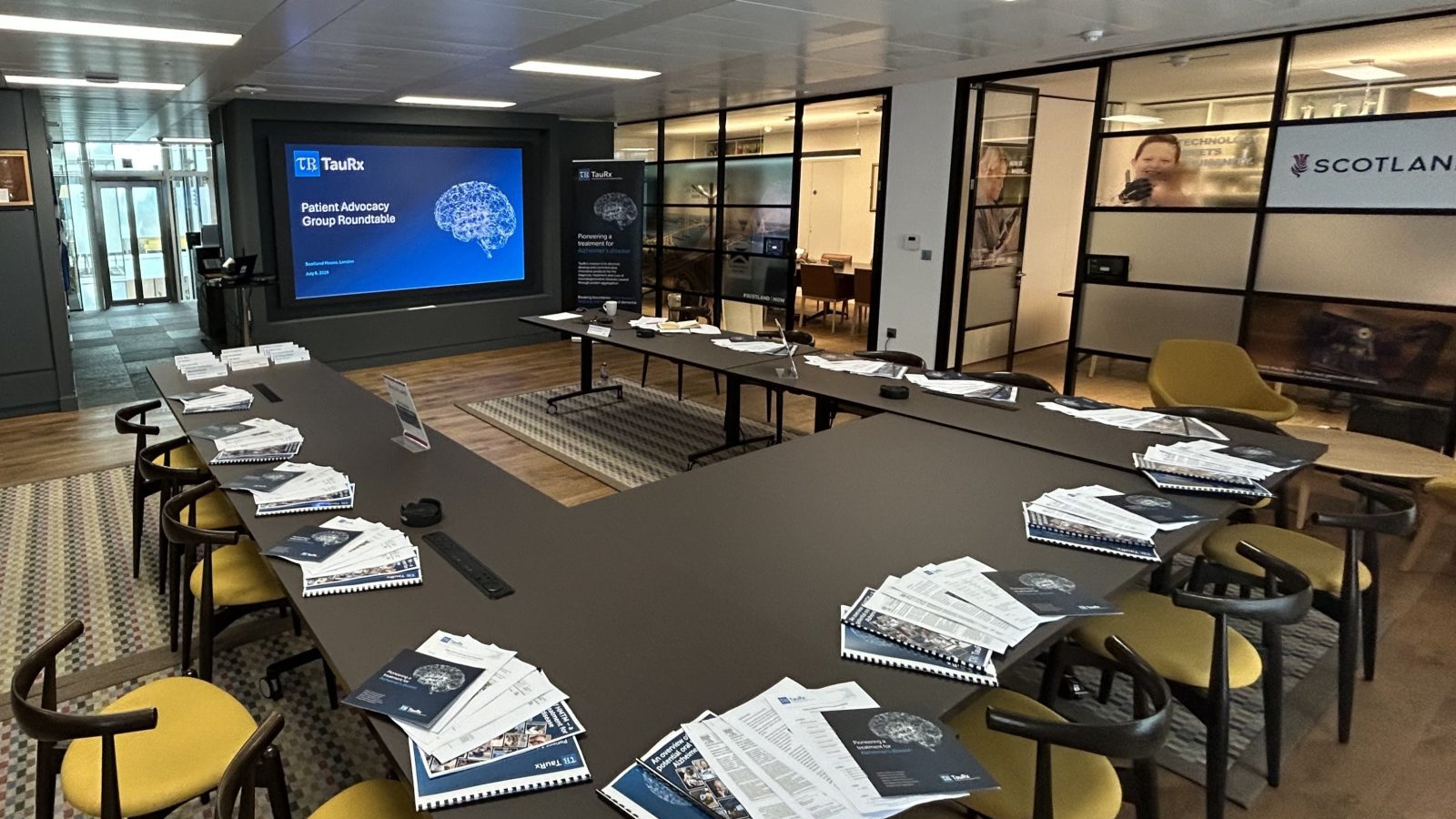
Professor Claude Wischik, TauRx Co-Founder and Chairman, said: “We are grateful for everyone sharing their time to discuss this important topic. The opportunity to gather leading patient advocacy groups in one place is rare, and it is an excellent illustration of the dedication that exists in trying to solve the global healthcare crisis that is Alzheimer’s disease.
“The conversation around our potential oral treatment was robust, as it should be, given the potential impact we believe it could have. Everyone present is working towards fulfilling the hope of slowing the decline of those impacted by Alzheimer’s.”
The groups present at Monday’s event represent the interests of people affected by Alzheimer’s and other dementias and serve as key bridge between patients, caregivers, healthcare providers, researchers, policymakers and industry.
Dr Glenn Corr, TauRx’s Chief Operations Officer and Chief Business Officer, added: “Improving outcomes for people living with Alzheimer's will require collaboration across all sectors. This excellent meeting was a real opportunity for us to do just that, and we are committed to continuing to work with all stakeholders.
“The importance of patient advocacy groups like those who joined us in London cannot be understated. For many people affected by dementia, these groups are the first place they turn to for guidance, and they do a wonderful and compassionate job assisting those who seek their help.
“We are committed to facilitating ongoing dialogue across the Alzheimer's community to help shape a future where scientific progress can be translated into real-world patient benefit.”
Peer-reviewed publications report that TauRx’s existing drug targeting the tau protein – a key hallmark of Alzheimer’s disease – halted progression of neurodegeneration, and that participants with Mild Cognitive Impairment (MCI) who received 16 mg/day experienced statistically significant cognitive improvement over 18 months.
Participants also displayed no evidence of statistically significant cognitive or functional decline over a period of two years. Trials also confirmed the drug has a benign safety profile, with headache (1.5%) and diarrhoea (1.2%) reported as the most frequent adverse effects at the 16 mg/day dose.
A decision on the company’s MHRA application is expected this year.