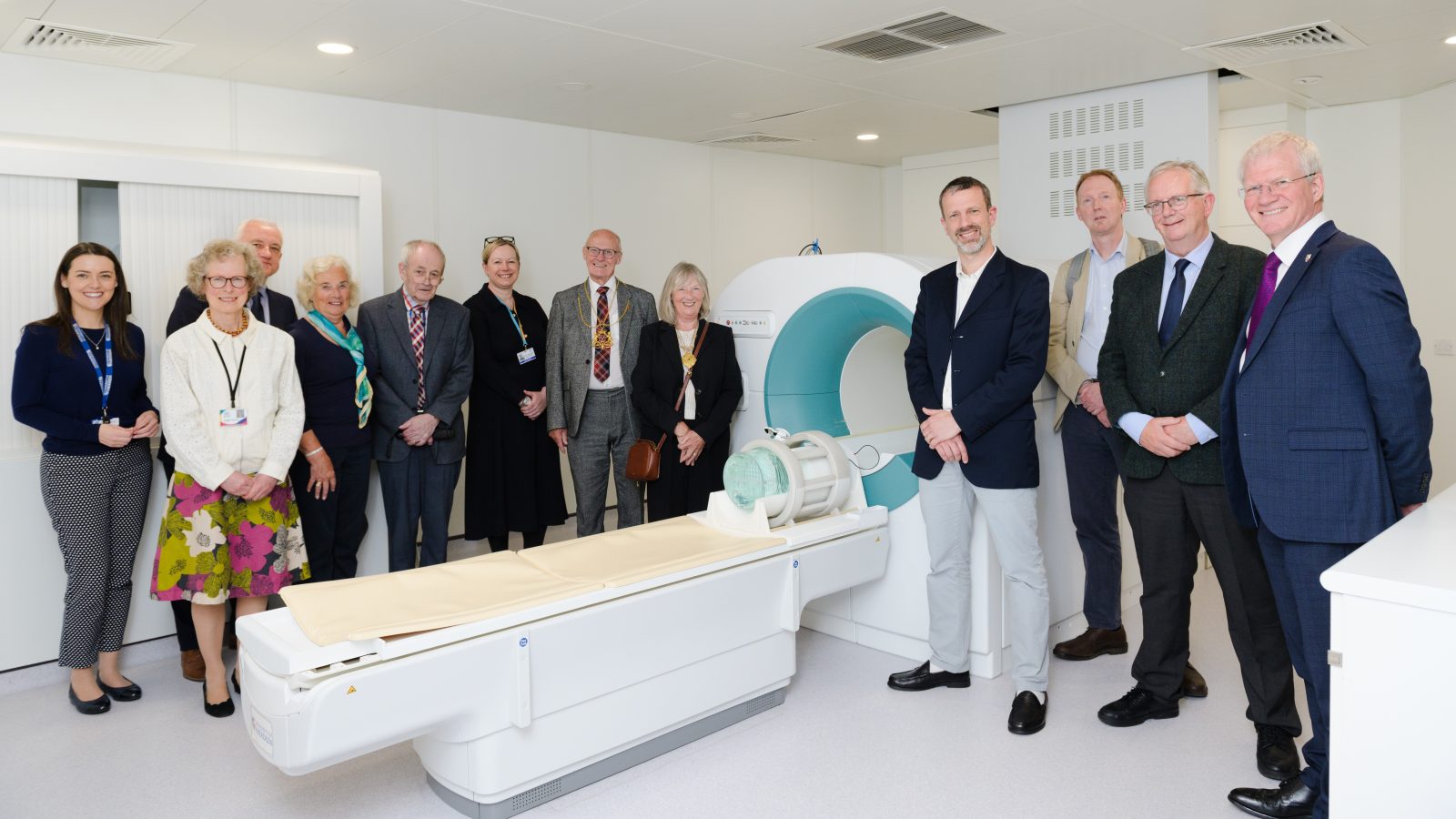
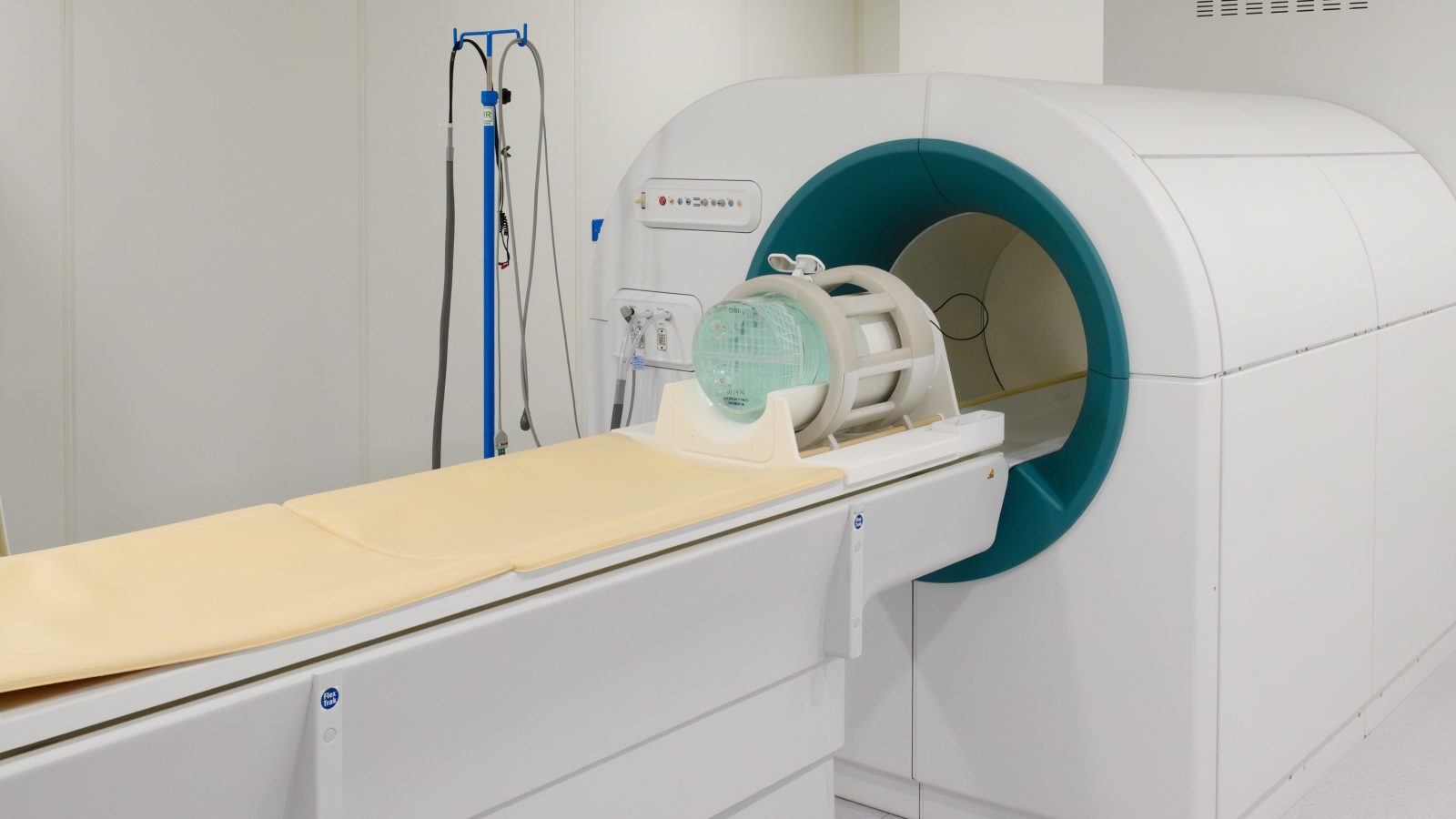
The University of Aberdeen has officially opened its next‑generation Field Cycling Imaging (FCI) whole‑body, medical imaging system.
This scanning technology reveals entirely new information about the human body and has the potential to transform diagnosis and treatment across multiple areas of medicine.
The FCI scanner is the only device of its kind capable of producing images of tissues in any organ of the body using a very wide range of magnetic fields, informing in ways that were previously not been accessible.
The breakthrough builds on the University of Aberdeen’s globally recognised legacy in medical imaging which began in the 1980’s when the University pioneered the world’s first whole-body MRI scanner under the leadership of Professor John Mallard and Professor Jim Hutchison. Their work laid the foundation for decades of innovation that continue today.
Research into variable magnetic fields began in the 1990s, when Professor Hutchison and Professor David Lurie (now Emeritus Professor) developed the PEDRI scanner capable of detecting free radicals. Although the technology did not find a direct clinical application, it revealed a powerful new opportunity - the ability to characterise molecular motion within the body in a non-invasive way.
Between 2010 and 2020, the team re‑imagined the technology to focus on detecting the movement of water molecules, a fundamental marker of tissue health. This work led to the first prototype Field Cycling Imager (Mk‑I), built on campus, which successfully detected stroke, brain cancer, breast cancer and colorectal cancer.
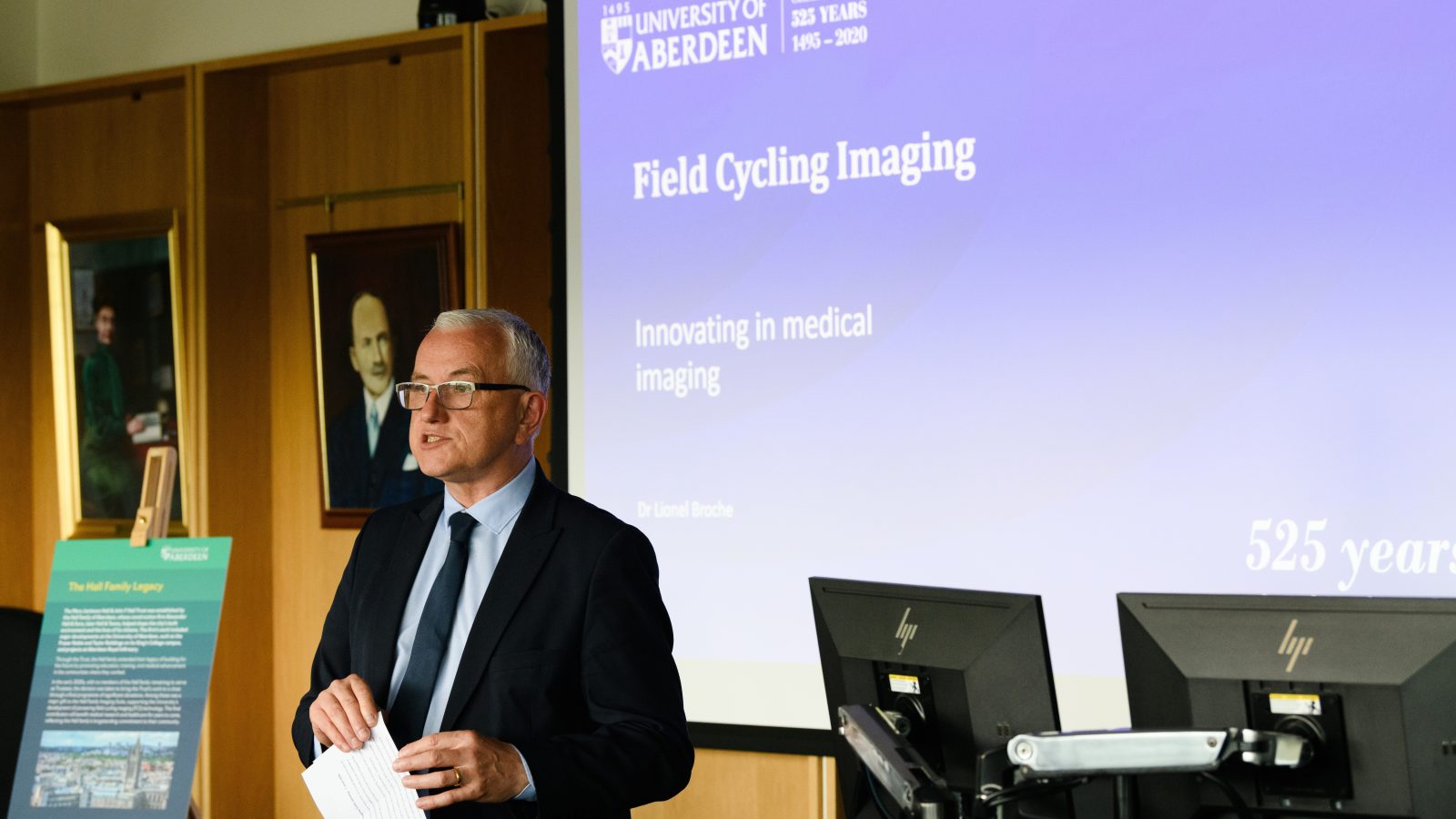
Following this success, Professor Lurie and Dr Lionel Broche, now Principal Investigator of the project, designed a significantly enhanced Mk‑II system in 2018. Its construction and commissioning, a seven‑year effort involving University investment, major grant funding, philanthropic support through the University of Aberdeen Development Trust, and numerous technical partners, has now been completed.
Since October 2025, four clinical research studies have begun using the new scanner, focusing on: acute stroke (Professor Mary J. MacLeod), brain health (Dr Gordon Waiter), cardiac fibrosis (Professor Dana Dawson) and brain cancer (Professor Anne Kiltie).
A further three studies will launch later in 2026, including projects on breast cancer, knee osteoarthritis and glioblastoma. Together, these represent £2.82 million in research funding secured in the scanner’s first year of activity.
Additional studies are in preparation to explore colorectal, ovarian and prostate cancers, as well as neurodegenerative conditions such as amyotrophic lateral sclerosis.
The facility, named the Hall Family Imaging Suite, was officially opened by James Birnie MBE, Trustee of Mary Jamieson Hall & John F. Hall Trust. The Hall Trust, along with The Wolfson Foundation, the University of Aberdeen Development Trust SCIO, the Sir Jules Thorn Charitable Trust and the Hugh Fraser Foundation made generous grants to make the project possible. Representatives of many of these organisations were welcomed onto campus for the opening.
Also in attendance were three of the first people to use the FCI including Gordon Alexander who participated in one of the research trials, Norma Ewen, the first patient to use the FCI scanner and Dr Richard Johnson who worked alongside Professor Mallard who built the original MRI scanner.
Speaking at the official opening, Principal and Vice‑Chancellor of the University of Aberdeen, Professor Peter Edwards praised the achievement as “a landmark moment for the University and for medical science.” He said: “The FCI team exemplifies the University’s Aberdeen 2040 strategy: interdisciplinary collaboration, real‑world impact and innovation that benefits society. Over two decades, the group has evolved from a physics‑led research environment into a fully integrated clinical‑scientific team, with physicists and clinicians working side by side. This is a truly historic achievement and signifies a new frontier in medical imaging.”