Researchers at The James Hutton Institute, in partnership with Scotland’s Rural College (SRUC), are exploring how different Bere barley varieties perform across a wide range of environments in Scotland and beyond.
The Hutton is a world leading research institute addressing the issue of global food security by finding scientific solutions for the sustainable management of land and natural resources and the demands for improved agricultural productivity and crop resilience.
It is home to the International Barley Hub (IBH), which promotes scientific discovery and innovation to future-proof barley, the UK’s most valuable crop. Climate change and other environmental challenges, coupled with increasing demand means that research into genetics and breeding is vitally important to safeguard production and ensure a sustainable future for this most critical of crops.
The Bere Barley Participatory Network, funded by Scottish Government, aims to identify which Bere varieties are best suited to particular locations and production systems, helping growers select the right barley for the right place.
Bere barley is an ancient cereal, once grown throughout Scotland but now largely confined to a handful of sites in the Highlands and Islands. As one of the oldest cultivated barleys in Europe, Bere is renowned for its rapid maturation, making it especially well adapted to short, cool growing seasons. It also shows a remarkable tolerance of marginal growing conditions compared with modern barley varieties.
Historically, Bere was a staple crop for both human and animal consumption and was widely used for animal bedding and thatching. Today, interest in Bere is growing once again, driven by brewers, distillers, and artisan bakers who value it as a distinctive, high-value product with strong provenance. Bere also represents an important reservoir of genetic traits that could support crop breeding for changing climates and more sustainable farming systems in the future.
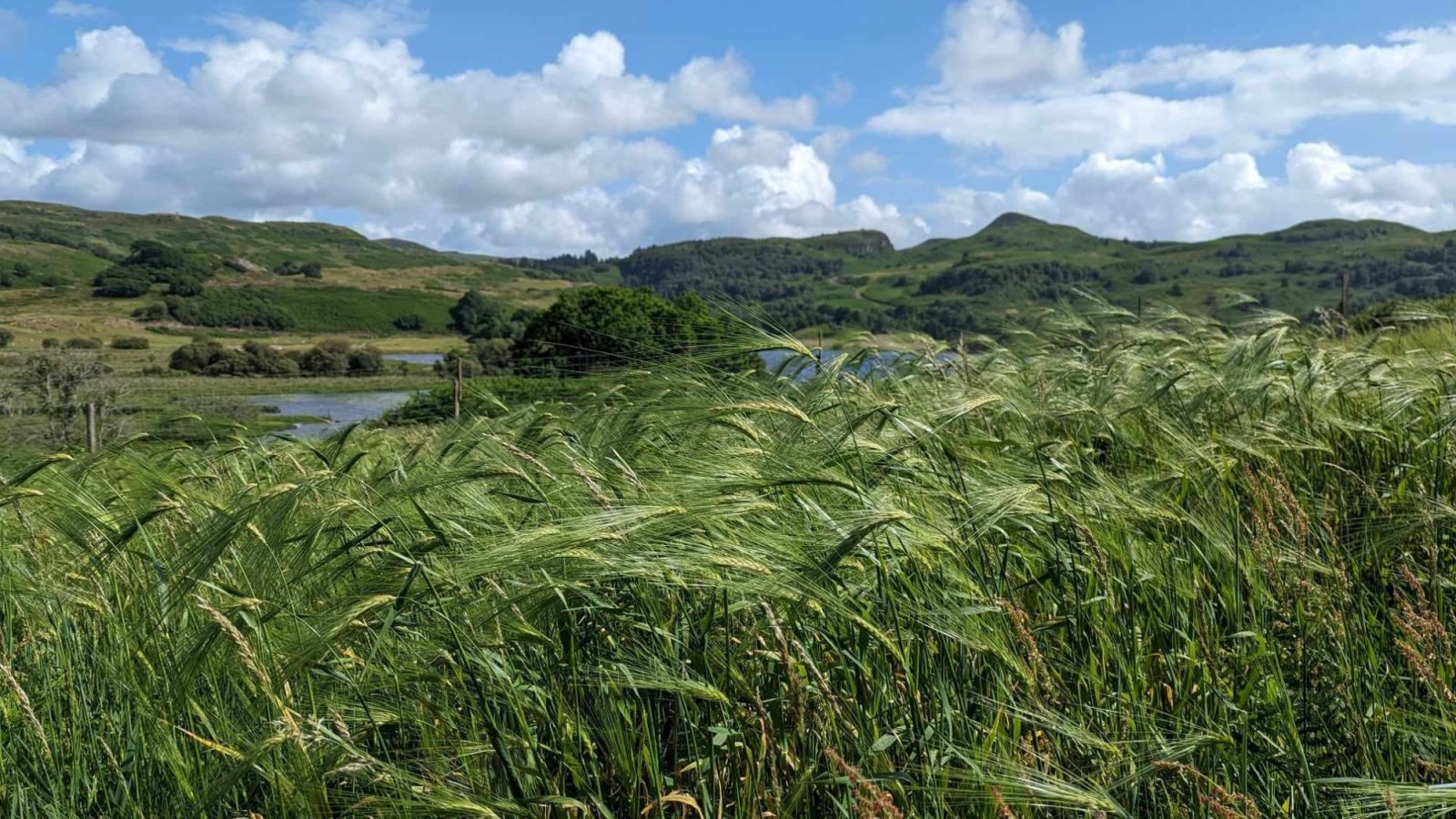
The project’s co-ordinator, Lawrie Brown of the Hutton, said, “In 2023, we established a participatory network of Bere barley growers, spanning a diverse range of sites across mainland Scotland and the islands. Trial locations ranged from hobby farms, crofts, organic farms, and community projects to urban gardens.
“Participants were motivated by a wide range of interests: bread making, crop heritage, film projects, whisky and beer production, and even larger-scale commercial opportunities. In subsequent years, the network has expanded beyond Scotland to include growers elsewhere in the UK, Ireland, and as far afield as Patagonia.
“Although 2026 marks the final year of the project, new participants are still very welcome. We would encourage anyone interested in growing Bere barley and contributing to the network to get in touch by emailing Lawrie.brown@hutton.ac.uk, by the end of January.”
For this project, starter packs, which include growing instructions, data collection sheets and materials for returning samples, as well as seeds, are distributed to the network for sowing in late February. Participants receive four barley types: a modern two-row control variety, KWS Sassy, listed on the Agriculture and Horticulture Development Board (AHDB) recommended list, and three Bere barley lines originating from North Uist, North Ronaldsay, Orkney, and Shetland. Growers are asked to submit a soil sample for analysis at the time of planting to establish the growing environment and will receive a visit from the Hutton team to offer support and observe the crop performance during the season.
Early findings from the project indicate that the Bere lines are generally better adapted than modern varieties to the wide range of soil types represented in the network, particularly soils with high pH that suffer from chronic manganese deficiency.
The project team was interested to note that in South Uist, the use of seaweed in the soil helped alleviate nutrient deficiencies in high-pH sandy soils. Results like these highlight the importance of interactions between Bere varieties and local agronomic practices.
As part of the project, SRUC has developed a new app, Dijalo, Swahili for ‘crop’, which will be trialled in 2026.
Ian Dawson, a member of the research team based at SRUC said, “The app will allow trial growers to submit information to the research team at the Hutton and SRUC without the need for paper records, which should make the whole data collection and processing of information from the trials easier.
“The plan is that crofters can help us improve the app so that we can use it for other on-farm trials too.”