Twelve years ago Brian Keeley was lying in a hospital bed, being kept alive by life-support machines. His condition was so grave that doctors introduced palliative care. Now he is celebrating something he never thought possible - graduating with a PhD.
In November 2013 Brian, an artist who was then based in Aberdeen, received a heart transplant following months in intensive care after suffering a severe heart attack while on holiday on the isle of Islay in the summer of that year.
He said: “In October 2013 I was still in intensive care with multi-organ failure. I wasn't expected to survive, let alone even be considered for a heart transplant.
“I spent 101 days without a pulse while machines took over my heart function. A ventilator pumped oxygen into my lungs, and I was on dialysis because my kidneys had failed. I had also suffered a stroke, a cardiac arrest, and had undergone several open-heart surgeries. The medics were considering switching off my life-support machines. But somehow, I survived long enough to be placed on the urgent transplant list in mid-October, and got a new heart two weeks later, on 2 November 2013.”
Since then, Brian has used his personal experience as a heart transplant recipient to inform both his creative practice and his subsequent PhD research, which focused on representations and myths around heart transplantation in contemporary art and visual culture.
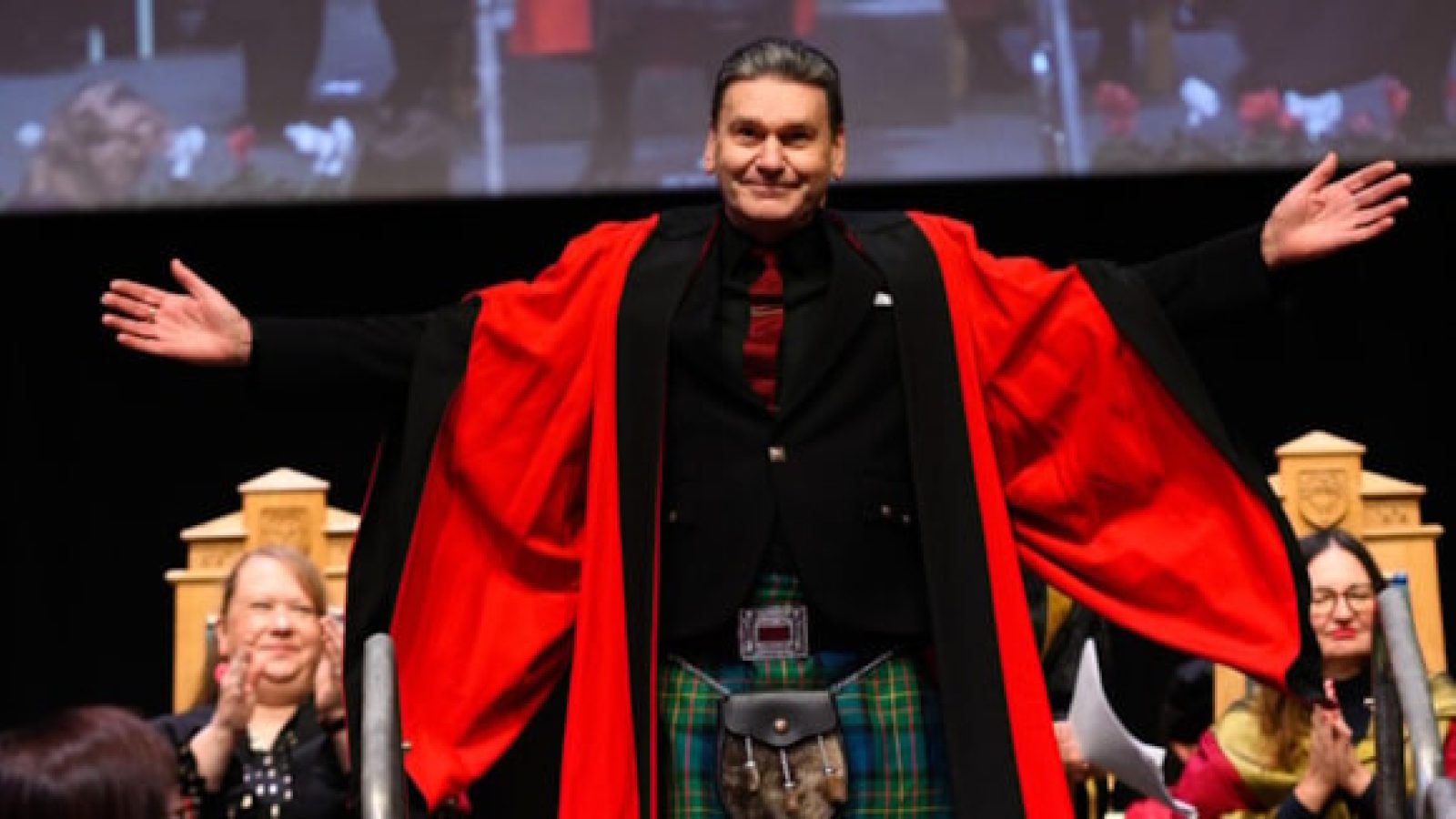
Setting out on his academic journey provided Brian with a new focus but studying through a global pandemic alongside his ongoing health complications brought additional challenges. “When I began my PhD in 2019, I hoped to complete it by my tenth heart transplant anniversary, which seemed like a significant milestone at the outset.” he added. “However, the Covid-19 pandemic changed everything. As an organ transplant recipient, I was among those at highest risk, because the medications I need to take to stay alive suppress my immune system and inhibit the ability to fight any infections or viruses. The Covid vaccinations were also largely ineffective for those with organ transplants. So, like many others, my 'lockdown' and social isolation effectively continued for more than three years.
“Further medical complications, as a legacy of my original illness, also delayed my PhD progress until I finally finished this year, 2025, with the continuing support from my supervisor Prof. Alan Marcus. So now, 12 years after my heart transplant, to be here to receive this PhD I have worked so hard for is a very special day.”
In addition to his academic research, Brian has also continued his artistic practice. His latest project is a collaborative exhibition with his wife and fellow artist, Bibo Keeley, which is currently on show at Moray Art Centre, Findhorn – near where they now live. “Bibo has been a vital part of our shared experience and creative journey throughout, and without her continued support I would never even have survived in the first place,” said Brian.
'The Shared Heart (12 Years)' is inspired by the artists’ lived experience of heart transplantation, and some of the films which are being screened in the exhibition gallery were created and presented as part of Brian’s PhD thesis.
Professor Alan Marcus, Chair in Creative and Cultural Practice who supervised Brian’s PhD, said: “Brian exemplifies how a gifted artist and a resilient individual, who has faced significant health challenges, can realise their ambitions and make a highly original and scholarly contribution to his field. My colleagues and I are delighted to celebrate his achievement.”
The exhibition 'The Shared Heart (12 Years)' runs at Moray Art Centre until 24 January 2026. Details and info: https://morayartcentre.org/events/the-shared-heart-12-years/ Some of the artworks can be seen on Instagram: @brian_keeley_artist and @bibo_keeley_artist