Step Change in Safety, the member-led organisation which works to prevent incidents and injuries across the energy industry through active leadership, member collaboration and workforce engagement, has published a new Process Safety Improvement Plan (PSIP) 8 Step Guidance.
The guidance is designed to help organisations strengthen process safety performance and deliver structured, risk-based improvement plans across the UKCS and other high-hazard sectors. The documentation has been endorsed by OEUK, HSE, IADC, OPRED and BROA, demonstrating broad industry support.
The release comes at a time when the energy sector faces mounting pressures, including ageing assets, resource challenges, organisational change, onboarding of new personnel (“green hats”), and the need for deeper collaboration across operators and contractors. These challenges make structured, risk-based improvement planning more critical than ever to prevent incidents and injuries across the energy industry, the core mission of Step Change in Safety.
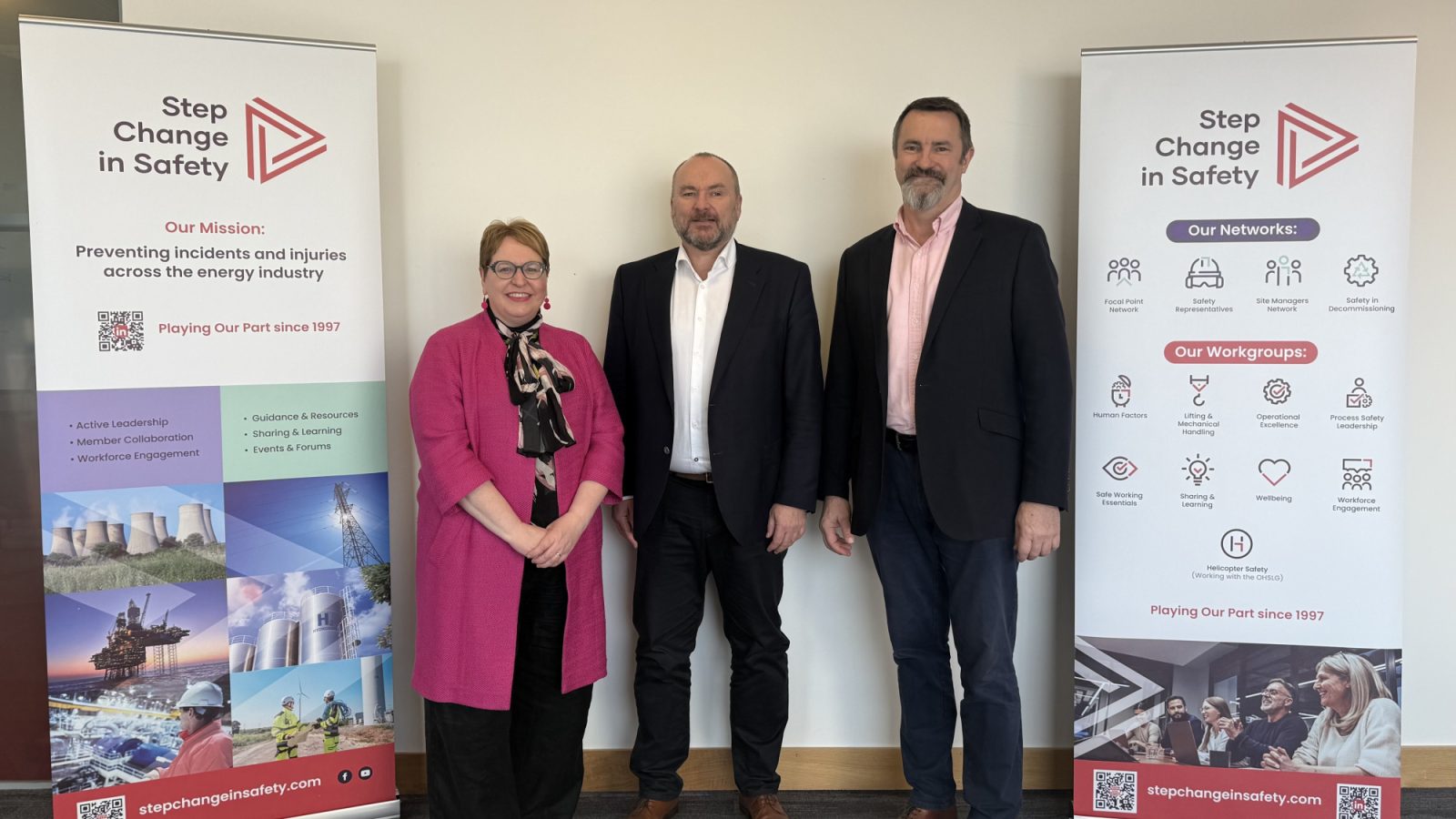
Laura Forté of bp & Co-Chair of the Step Change in Safety Process Safety Leadership Work Group, Craig Wiggins - CEO Step Change in Safety and Bruce Webb of Scapa Energy & Co-Chair of the Step Change in Safety Process Safety Leadership Work Group.
The guidance was developed by the Process Safety Leadership Work Group which is co-chaired by Laura Forté of bp and Bruce Webb of Scapa Energy. In a joint statement on the importance of the new PSIP guidance, they comment, “Built on the shared experience of North Sea operators, this guidance is globally applicable and designed to support both the development of first-time PSIPs and the ongoing improvement of existing arrangements.”
The guidance follows the HSE’s Process Safety Leadership Programme (PSLP) Inspection Findings (Feb 2025), which identified recurring industry challenges, including cumulative risk management, audit and assurance effectiveness, leadership competence, contractor oversight, organisational change, and structured PSIP development.
The PSIP guidance provides a practical framework to address these themes, helping companies develop prioritised, measurable, and leadership-owned improvement plans.
The 8-step framework covers:
- Leadership and accountability
- Stakeholder engagement
- Risk-based inputs
- Tactical and strategic balance
- Measurable outcomes
- Integration and performance alignment
- Detailed action planning
- Review and continuous improvement
Craig Wiggins, CEO Step Change in Safety, says, "This guidance gives organisations a clear, practical approach to strengthening process safety and embedding leadership accountability at every level. Designed for easy integration into leadership calendars, MAH management cycles, audit programmes, and business planning, it helps companies take structured, measurable action to improve safety performance and protect their people and operations."
The PSIP guidance also complements a series of workshops hosted by the PSL Workgroup on key HSE themes, including risk management, contractor oversight, leadership competence, and organisational change, enabling shared learning across operators and contractors.
The guidance is publicly available at: https://www.stepchangeinsafety.com/resources/process-safety-improvement-plan-8-steps-guidance/
For further information or to future PSL shared-learning events, contact: info@stepchangeinsafety.net